


Keeping an eye on your car’s transmission fluid is one of those simple maintenance tasks that can save you from huge headaches down the road. Transmission fluid keeps everything running smoothly by lubricating gears, cooling components, and helping with gear shifts. If it’s low or in bad shape, you might end up with slipping gears, overheating, or even a full transmission failure—which nobody wants. Learning how to check transmission fluid is straightforward, and doing it regularly can extend the life of your vehicle.
In this guide, we’ll walk through everything you need to know about how to check transmission fluid, from the basics to more advanced scenarios. Whether your car has an automatic or manual transmission, or even one of those modern sealed units without a dipstick, we’ve got you covered. Regular checks help catch issues early, so let’s dive in and make sure your ride stays in top shape.
Why Checking Transmission Fluid Matters
Transmission fluid isn’t just some random liquid under the hood—it’s the lifeblood of your transmission system. It lubricates moving parts, prevents overheating, and ensures smooth shifting. Ignoring it can lead to costly repairs, but a quick check on how to check transmission fluid can prevent that.
Low or dirty fluid causes gears to grind, shifts to feel jerky, or the whole system to overheat. Think of it like blood in your body: if it’s not flowing right or gets contaminated, things go wrong fast. By learning how to check transmission fluid, you’re taking a proactive step toward better vehicle health and potentially saving thousands in repair bills.
Tools and Safety Precautions for Checking Transmission Fluid
Before you pop the hood and start figuring out how to check transmission fluid, gather a few basics. You’ll need a clean rag or paper towel, gloves to keep your hands clean, and possibly a funnel if you need to add fluid. Safety first: always park on a level surface, engage the parking brake, and let the engine cool a bit if it’s been running hot.
Wear old clothes because transmission fluid can stain, and avoid hot engine parts. If your car has been driving, the fluid will be warm—perfect for an accurate reading, but be careful not to burn yourself. These simple prep steps make the process of how to check transmission fluid safe and hassle-free.
Step-by-Step Guide to Checking Transmission Fluid in Automatic Transmissions
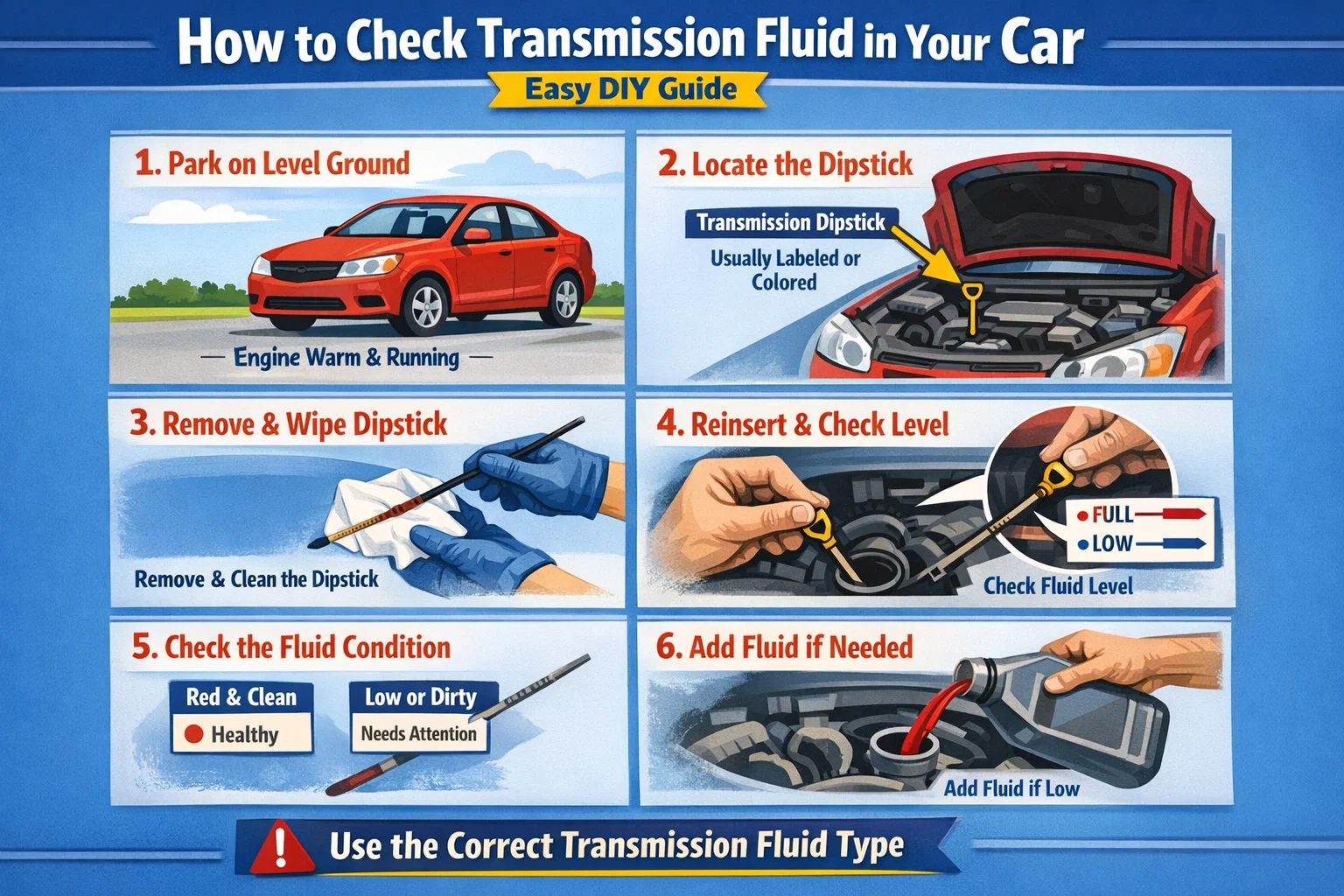
Most cars on the road have automatic transmissions, and knowing how to check transmission fluid here is key. Start by warming up the engine—drive around for 10-20 minutes so the fluid is at operating temperature. Park on a flat surface, shift into Park, and leave the engine running.
Locate the dipstick (usually red or yellow handle, toward the back of the engine bay). Pull it out, wipe it clean, reinsert fully, then pull it again to read the level. The fluid should be between the “full” and “add” marks on the hot side. This method for how to check transmission fluid ensures accuracy since fluid expands when warm.
Locating the Transmission Dipstick
Finding the dipstick is the first hurdle in how to check transmission fluid. In rear-wheel-drive vehicles, it’s often toward the firewall. Front-wheel-drive cars usually have it near the oil dipstick on the driver’s side.
If you’re struggling, consult your owner’s manual—it’s the best resource. Some dipsticks have a loop handle, others a T-shape, but they’re labeled “transmission” or “ATF.” Once located, the rest of how to check transmission fluid falls into place easily.
Understanding Transmission Fluid Levels and Markings
Dipsticks have markings that make how to check transmission fluid straightforward. There’s usually a “hot” range for checks with the engine warm and running, and a “cold” for quick glances.
The fluid should sit in the hashed or dotted area for “full.” Too low means add some; too high can cause foaming and issues. Always double-check by wiping and re-dipping—false readings happen if you don’t. Mastering these markings is crucial for accurate how to check transmission fluid results.
Interpreting Transmission Fluid Color and Condition
Color tells a story when you learn how to check transmission fluid. Fresh fluid is bright red and translucent. As it ages, it darkens to maroon or brown—that’s normal with mileage.
But if it’s dark brown, black, or has a burnt smell, it’s time for a change. Milky or pinkish means contamination, often from coolant mixing in. During how to check transmission fluid, rub some between your fingers: it should feel smooth, not gritty.
Here’s a simple table to help interpret colors:
| Color | Condition | Action Needed |
|---|---|---|
| Bright Red/Transparent | New/Good | No immediate action; monitor regularly |
| Dark Red/Maroon | Normal Aging | Check soon; consider change if high mileage |
| Light Brown | Oxidized but Usable | Plan a fluid change |
| Dark Brown/Black | Burnt/Contaminated | Change immediately; inspect transmission |
| Milky/Pink | Water or Coolant Mix | Urgent repair needed |
“As a mechanic with over 20 years under the hood, I’ve seen countless transmissions saved by a simple fluid check. Bright red means you’re good to go, but anything darker than maroon is a warning sign.” – Experienced Auto Technician
How to Check Transmission Fluid in Manual Transmissions
Manual transmissions differ when it comes to how to check transmission fluid. Many don’t have a dipstick—instead, there’s a fill plug on the side of the transmission case.
Jack up the car safely on level ground, locate the plug (usually midway up the side), and remove it. Fluid should be at the bottom of the hole—if you can touch it with your finger, it’s good. This side-plug method is the standard for how to check transmission fluid in stick shifts.
Checking Transmission Fluid in Sealed Transmissions Without a Dipstick
Newer cars often have sealed transmissions, making how to check transmission fluid trickier—no dipstick means no easy home check. These are designed as “lifetime” filled, but fluid still degrades.
You’ll need a scan tool for temperature or a dealer visit. Some have hidden plugs or require lifting the car. If yours is sealed, professional checks during service are best for how to check transmission fluid accurately.
Common Mistakes When Checking Transmission Fluid
Even pros mess up how to check transmission fluid sometimes. Checking cold gives false lows; not wiping the dipstick first leads to inaccurate reads.
Overfilling is common—add slowly and recheck. Forgetting to run the engine (for autos) or not shifting through gears circulates fluid improperly. Avoid these pitfalls, and your how to check transmission fluid routine will be spot-on.
Signs of Low or Bad Transmission Fluid
Beyond direct checks, your car signals when it’s time to learn how to check transmission fluid. Slipping gears, delayed shifts, or whining noises point to low levels.
Burning smells, overheating warnings, or leaks under the car are red flags. If shifting feels rough or the check engine light pops on, don’t ignore it—promptly how to check transmission fluid can prevent bigger issues.
“One time, a customer ignored a slight slip, thinking it was nothing. Ended up with a $4,000 rebuild. A quick fluid check could have caught it early.” – Shop Owner Quote
When and How Often to Check Transmission Fluid
Make how to check transmission fluid a habit—monthly is ideal, especially for older cars. Do it every oil change or before long trips.
High-mileage vehicles or those towing need more frequent checks. Hot weather stresses fluid, so summer inspections help. Consistency in how to check transmission fluid keeps surprises at bay.
Adding Transmission Fluid If Low
If how to check transmission fluid shows it’s low, add the right type—check your manual for specs like Dexron or Mercon.
Use a funnel through the dipstick tube, add small amounts, and recheck. Overfilling causes problems, so go slow. After adding, drive a bit and re-perform how to check transmission fluid for accuracy.
Best Practices for Transmission Maintenance
Regular how to check transmission fluid is great, but pair it with full maintenance. Change fluid per manufacturer intervals—30,000 to 100,000 miles typically.
Avoid hard launches, use the parking brake on hills, and cool down after heavy use. These habits complement how to check transmission fluid for long transmission life.
Conclusion
Mastering how to check transmission fluid is empowering—it puts you in control of your car’s health and can prevent expensive breakdowns. From locating the dipstick to interpreting colors and levels, these steps are simple yet powerful. Stay consistent with checks, address issues promptly, and your transmission will thank you with smooth, reliable performance for years to come. Drive safe, and keep that fluid in check!
Frequently Asked Questions
How often should I check my transmission fluid?
You should check your transmission fluid at least once a month or every time you get an oil change. For vehicles with high mileage or those used for towing, more frequent checks—like before long trips—are a good idea. Regular monitoring as part of how to check transmission fluid helps catch low levels or degradation early.
What if my car doesn’t have a transmission dipstick?
Many modern vehicles have sealed transmissions without a dipstick, making traditional how to check transmission fluid methods impossible at home. In these cases, take it to a professional mechanic or dealership. They use special tools or plugs to check levels accurately, often during scheduled service.
Can low transmission fluid cause my check engine light to come on?
Yes, low or bad transmission fluid can trigger the check engine light. Sensors detect issues like improper pressure or overheating. If the light comes on along with shifting problems, learning how to check transmission fluid (or having it checked) is a smart first step before assuming worse.
Is it safe to drive with low transmission fluid?
No, driving with low transmission fluid is risky—it can cause slipping, overheating, or permanent damage. If you suspect low levels from symptoms like delayed shifts, stop driving and address it immediately. Properly how to check transmission fluid and top up if needed before hitting the road again.
What type of transmission fluid should I use?
Always use the exact type specified in your owner’s manual—common ones include ATF+4, Mercon V, or CVT fluid. Using the wrong kind can damage your transmission. When adding after how to check transmission fluid, match the existing fluid to avoid compatibility issues.
Why does my transmission fluid smell burnt?
A burnt smell during how to check transmission fluid usually means it’s overheated and oxidized, often from low levels, old age, or heavy use. This dark, burnt fluid needs immediate replacement to prevent further damage—don’t ignore it.
