


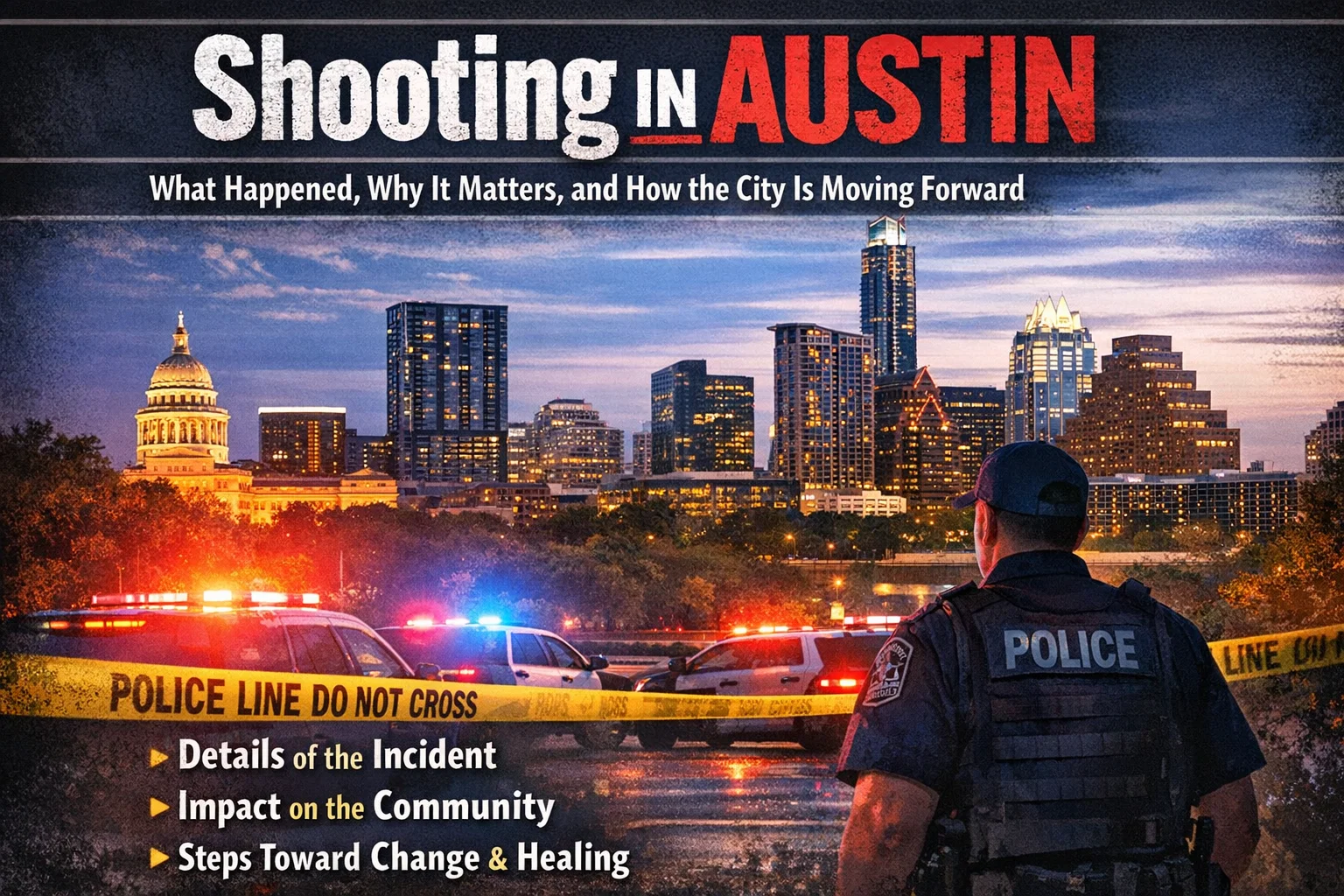
The shooting in Austin that unfolded early on March 1, 2026, sent shockwaves through the Texas capital and beyond. Just as bars along the lively West Sixth Street were winding down for the night, gunfire erupted outside Buford’s Backyard Beer Garden, turning a popular nightlife spot into a scene of chaos and heartbreak. Three innocent people lost their lives, more than a dozen others were injured, and the shooter was fatally shot by police in what authorities are still investigating as a possible act of targeted violence with potential terrorism links.
This tragic event has left residents, visitors, and the broader community grappling with questions about safety, mental health, and the broader patterns of violence that occasionally disrupt Austin’s vibrant culture. While the city is known for its live music, tech innovation, and laid-back vibe, moments like this remind everyone that no place is immune to sudden tragedy. In the days and weeks since, local leaders, law enforcement, and everyday folks have come together to support victims’ families, strengthen security measures, and reflect on what can be done to prevent future incidents.
If you’re searching for clear, straightforward information on the shooting in Austin, you’re in the right place. We’ll walk through the latest details, the historical backdrop, the human stories behind the headlines, and practical steps anyone in or visiting the city can take to feel safer. Let’s break it all down together, one section at a time, so you can understand not just what happened but why it resonates so deeply with so many.
The Recent Shooting in Austin: A Night That Changed Sixth Street Forever
On that fateful Sunday morning around 2 a.m., the streets of downtown Austin were still buzzing with energy from the weekend crowds. Sixth Street, famous for its bars, live music, and college-student hangouts, was packed with people enjoying their night out. Then, without warning, a gunman opened fire from a vehicle before stepping out and continuing the attack with both a pistol and an AR-15-style rifle. The barrage lasted only a few intense minutes, but the consequences will linger for years.
Eyewitnesses described hearing rapid pops that sounded like fireworks at first, then realizing the horror as people scattered, screamed, and sought cover. Police responded swiftly, confronting and neutralizing the suspect on scene. The quick action by officers likely prevented even greater loss of life, but the damage was already done. Three victims—19-year-old Ryder Harrington, 21-year-old Savitha Shan, and 30-year-old Jorge Pederson, who succumbed to his injuries days later—were killed. Thirteen more were hospitalized with injuries ranging from minor to critical.
What makes this shooting in Austin particularly jarring is its location. Sixth Street has long been the heartbeat of Austin’s nightlife, drawing tourists, locals, and students from the nearby University of Texas campus. In the aftermath, the area was cordoned off as investigators worked through the night, collecting evidence and piecing together the sequence of events. Blood donations poured in from across Texas, and community vigils lit up the streets with candles and flowers. It wasn’t just another news story—it felt personal to anyone who’s ever strolled those same sidewalks.
Timeline of Events During the Shooting in Austin
Let’s walk through exactly how that chaotic night unfolded, based on official police reports and eyewitness accounts that have emerged since. Around 1:58 a.m., the first 911 calls flooded in reporting shots fired near Buford’s. The suspect, later identified as 53-year-old Ndiaga Diagne, had driven past the bar and fired from his vehicle into the outdoor patio area. He then parked, exited, and continued shooting along West Sixth Street and connecting roads, using both a handgun and a rifle.
Within minutes, Austin Police Department officers arrived on scene. They engaged the gunman in a brief but decisive confrontation, fatally shooting him before he could cause more harm. By 2:03 a.m., the scene was secured, but emergency medical teams were already rushing the wounded to nearby hospitals. Three people were pronounced dead on the spot, including the shooter, while others were transported for urgent care. A third victim passed away in the hospital in the following days, bringing the death toll to three civilians plus the perpetrator.
Investigators from the Austin Police Department and the FBI worked through the early morning hours, processing the scene and interviewing witnesses. By Monday, officials confirmed the victims’ identities and began releasing more details about the firearms, which were legally purchased years earlier. The rapid timeline—from first shots to resolution—highlights both the unpredictability of such events and the professionalism of first responders who train for exactly these scenarios.
This detailed breakdown helps paint a clearer picture of the shooting in Austin, showing how quickly things can escalate in a crowded public space and underscoring the importance of preparedness in any busy urban area.
Victims and Heroes: Human Stories from the Shooting in Austin
Behind every statistic in the shooting in Austin are real people whose lives were forever altered. Ryder Harrington, a 19-year-old former Texas Tech student, was out enjoying the nightlife when he was struck. Friends described him as outgoing and full of potential, someone who lit up any room he entered. Savitha Shan, 21, was a vibrant young woman whose family spoke of her kindness and dreams for the future. Jorge Pederson, 30, fought for his life in the hospital before ultimately passing, leaving behind loved ones who continue to mourn.
Then there are the survivors—those who ran for cover, helped others, or simply found themselves in the wrong place at the wrong time. One young UT senior shared how he ducked behind a parked car as bullets whizzed past, his heart pounding while he texted his family that he loved them. Strangers became heroes that night, applying pressure to wounds, guiding the injured to safety, and staying with victims until help arrived.
These personal accounts bring the tragedy into sharp focus. Families have set up support funds, and GoFundMe pages have raised thousands for medical bills and funeral costs. The community’s outpouring of support—meals delivered to hospitals, counseling sessions offered free of charge—shows the best of Austin’s spirit even in its darkest moments. Hearing these stories reminds us that the shooting in Austin wasn’t just a news event; it was a deeply human one that touched countless lives.
Who Was the Shooter in the Austin Incident?
Ndiaga Diagne, the 53-year-old man responsible for the shooting in Austin, was a naturalized U.S. citizen originally from Senegal who had lived in the Pflugerville area for years. Public records show he became a citizen in 2013 after arriving in the country around 2000. He had no prior criminal history that would have flagged him as a threat, which has left investigators and the public searching for answers about what led to his actions.
Diagne was reportedly wearing clothing with symbolic elements, including a hoodie that read “Property of Allah” and an undershirt featuring Iranian flag imagery. These details, combined with the timing amid international tensions involving Iran, prompted the FBI to investigate possible terrorism motivations. Divorce filings from a few years earlier painted a picture of personal struggles, including claims of “cruel treatment” in his marriage and loss of custody of his children.
While the full psychological profile is still under review, early reports suggest Diagne acted alone. The firearms he used were legally obtained back in 2017. Understanding the shooter’s background is part of the ongoing investigation, but it also sparks broader conversations about mental health, radicalization, and how seemingly ordinary individuals can commit extraordinary acts of violence.
Possible Motives and the FBI Investigation into the Shooting in Austin
The FBI’s joint terrorism task force jumped into the case almost immediately after the shooting in Austin, citing “indicators of potential ties to terrorism.” Officials have been careful not to jump to conclusions, but the clothing, the method of attack, and the public setting all point toward a deliberate act rather than a random dispute.
Investigators are examining Diagne’s digital footprint, travel history, and any communications that might reveal a motive. Some reports have linked the timing to recent U.S. strikes involving Iran, though no definitive connection has been confirmed. Local and federal agencies continue to comb through evidence, including ballistics, vehicle data, and witness statements.
This phase of the probe is crucial not just for justice but for preventing similar attacks. The shooting in Austin has prompted reviews of threat assessment protocols across Texas, with a focus on public venues like bars and entertainment districts. While the public waits for clearer answers, the emphasis remains on supporting victims and keeping the community informed without sensationalizing the details.
A Look Back: The Long History of Shootings in Austin
Austin has experienced its share of tragic violence over the decades, making the recent shooting in Austin part of a larger, painful pattern. From the infamous University of Texas Tower shooting in 1966 to more recent incidents on Sixth Street and elsewhere, the city has seen how quickly calm can turn to crisis. Understanding this history helps provide context without diminishing the uniqueness of each event.
The 1966 UT Tower massacre remains the deadliest in Austin’s history, with Charles Whitman killing 15 people and injuring dozens more from the observation deck. It marked a grim milestone in American mass shooting history and led to changes in campus security and mental health awareness. Fast-forward to the 2020s, and Sixth Street has seen multiple shootings, including a 2021 incident that killed one and injured 14 during a crowded night.
These events, while separated by time, share common threads: crowded public spaces, access to firearms, and the element of surprise. The shooting in Austin on March 1 fits into this timeline but stands out because of its potential ideological elements and the swift law enforcement response.
The 1966 UT Tower Shooting: Austin’s Defining Tragedy
No discussion of shootings in Austin would be complete without revisiting the events of August 1, 1966. Charles Whitman, a former Marine and UT student, ascended the Tower with an arsenal and unleashed terror for over 90 minutes. He had killed his mother and wife earlier that morning before turning his attention to the campus below.
Whitman’s actions shocked the nation and the world, becoming one of the first widely televised mass shootings. Police officers Ramiro Martinez and Houston McCoy, along with civilian Allen Crum, eventually stormed the deck and ended the rampage. The incident led to the creation of SWAT teams and major reforms in how law enforcement handles active shooter situations.
Even today, the Tower stands as both a symbol of the university and a reminder of resilience. Annual memorials honor the victims, and the university has implemented extensive safety protocols, including emergency alert systems and mental health resources. The 1966 shooting in Austin set a tragic precedent, influencing national conversations about gun violence for generations.
Recent Sixth Street Shootings and Patterns in Downtown Austin
Sixth Street has unfortunately hosted several violent episodes in the past decade alone. In 2016, one person was killed and four injured in a late-night shooting. The 2021 incident during a busy weekend left a New York tourist dead and 14 others wounded when shots rang out into a crowd. A 2022 event during SXSW hospitalized four people.
These incidents often occur in the early morning hours when bars are closing and crowds are dense. Alcohol, large gatherings, and the mix of locals and visitors can create volatile situations. The recent shooting in Austin echoes these patterns but escalated with the use of multiple weapons and a more sustained attack.
City officials have responded with increased patrols, better lighting, and calls for more responsible bar practices. Yet the entertainment district remains a draw for millions each year, balancing economic vitality with the need for enhanced safety.
The 2025 North Austin Target Parking Lot Shooting
In August 2025, another heartbreaking shooting in Austin occurred in the parking lot of a Target store on Research Boulevard. A gunman named Ethan Nieneker carried out a random attack that killed three people: a store employee collecting carts, a man in his vehicle, and the man’s 4-year-old granddaughter. The wife sustained minor injuries.
Nieneker was arrested after officers found him nearby, and the investigation revealed a series of unprovoked acts within a short time frame. This event, though different in setting from the bar shooting, highlighted vulnerabilities in everyday public spaces like retail areas. It prompted reviews of parking lot security and employee safety training across the city.
Incidents like this and the recent Sixth Street tragedy show that shootings in Austin can happen anywhere—from nightlife hubs to suburban shopping centers—underscoring the need for citywide vigilance.
How the Shooting in Austin Has Impacted the Local Community
The emotional toll of the shooting in Austin has been profound. Vigils, prayer services, and community meetings have filled the calendar in the weeks since. Schools and universities have offered counseling, while businesses near Sixth Street reported temporary dips in foot traffic as people processed their fears.
Yet Austin’s community spirit shines through. Neighbors have organized meal trains for affected families, and local artists have created murals honoring the victims. The tragedy has also sparked renewed dialogue about gun violence prevention, mental health support, and the role of federal and local agencies in keeping people safe.
For many, the shooting in Austin has become a rallying point—not just for grief but for action. Residents are more aware of their surroundings, and organizations focused on youth programs and conflict resolution have seen increased volunteer interest. It’s a testament to the city’s resilience that even in sorrow, people come together to rebuild stronger.
Effects on Businesses, Tourism, and Nightlife in Austin
Downtown businesses felt the immediate ripple effects after the shooting in Austin. Some bars and restaurants saw fewer patrons in the following weeks, especially on weekend nights. Tourism boards quickly reassured visitors that the area remains safe with heightened security, and SXSW 2026 proceeded with extra measures in place.
Hotel bookings held steady overall, but feedback from visitors highlighted concerns about late-night safety. In response, the city and business associations rolled out initiatives like free shuttle services, more visible police presence, and safety apps that alert users to incidents.
The economic impact is real but likely temporary. Austin’s reputation as a creative, welcoming city has helped it weather similar storms before. Long-term, the focus is on balancing fun and security so that the shooting in Austin doesn’t overshadow the positive experiences millions enjoy here every year.
Safety Tips for Residents and Visitors After the Shooting in Austin
Staying safe in any bustling city like Austin requires a mix of common sense and preparation. After the recent shooting in Austin, experts recommend several practical steps. First, stay aware of your surroundings—especially in crowded areas late at night. Trust your instincts; if something feels off, move to a well-lit, populated spot or contact security.
Second, know your escape routes. Whether you’re at a bar, concert, or festival, identify exits and safe gathering points in advance. Download emergency alert apps from the Austin Police Department and enable location services for quick notifications.
Third, limit alcohol intake if you’re out late, as impaired judgment can slow reaction times. Travel in groups when possible, and use rideshare services rather than walking alone. For families or tourists, consider daytime activities in high-traffic areas and avoid isolated spots after dark.
Finally, support local initiatives that promote safety, such as community watch programs or calls for better mental health resources. These small actions add up, helping everyone feel more secure in the wake of the shooting in Austin.
Law Enforcement’s Response and Lessons Learned
Austin Police Department officers acted with remarkable speed and bravery during the shooting in Austin, neutralizing the threat in under five minutes. Chief Lisa Davis praised her team while acknowledging the emotional weight they carry. The coordination with the FBI has been seamless, with joint updates keeping the public informed.
This incident has led to internal reviews of active shooter protocols, communication systems, and equipment. Training simulations now incorporate scenarios involving multiple weapons and vehicle attacks. The department has also expanded community outreach, hosting town halls to address concerns directly.
Broader lessons include the value of rapid response, public-private partnerships for security, and the need for ongoing investment in technology like surveillance cameras and gunshot detection systems. The shooting in Austin serves as a case study for other cities facing similar challenges.
Community Efforts and Prevention Strategies Moving Forward
In the aftermath of the shooting in Austin, grassroots organizations have stepped up. Mental health hotlines have seen record calls, and nonprofits focused on gun violence prevention are pushing for stronger background checks and red-flag laws. Schools are incorporating more conflict resolution programs, while faith groups host healing circles.
Tech companies based in Austin have offered pro bono services to develop better emergency notification tools. Neighborhood associations are advocating for more lighting and cameras in entertainment districts. These collective efforts show a city determined not to let tragedy define its future.
Prevention also means addressing root causes like economic stress, isolation, and access to care. By investing in these areas, Austin aims to reduce the likelihood of another shooting in Austin while fostering a stronger, more connected community.
Mental Health, Gun Control, and Broader Conversations
The shooting in Austin has reignited debates about mental health support and gun regulations. Advocates point to the need for better screening processes and easier access to counseling, especially for those showing signs of distress. On the other side, discussions focus on responsible ownership and the balance between rights and safety.
Local leaders have called for a comprehensive approach that includes education, early intervention, and community-based programs. Universities and workplaces are expanding employee assistance programs, recognizing that prevention starts long before any crisis.
These conversations, though difficult, are necessary. The goal is not to assign blame but to find practical solutions that honor the victims while protecting future generations from similar pain.
What the Future Holds for Austin After This Tragedy
As weeks turn into months, Austin is healing while staying vigilant. Security enhancements are visible but not overwhelming, designed to preserve the city’s welcoming atmosphere. Tourism campaigns highlight the resilience and joy that define the capital, reminding everyone why people love calling it home.
The shooting in Austin will be remembered through annual memorials and policy changes, but it won’t overshadow the city’s vibrant future. New safety technologies, stronger community bonds, and a continued focus on well-being are paving the way forward.
Residents and visitors alike can take pride in how the city has responded—with compassion, determination, and hope. Austin’s story is one of growth, creativity, and unity, even in the face of adversity.
Conclusion
The shooting in Austin on March 1, 2026, was a heartbreaking reminder of life’s fragility, yet it also revealed the strength and kindness that bind this city together. From the immediate heroism of first responders to the long-term efforts of neighbors and leaders, Austin has shown it can face tragedy head-on while building a safer tomorrow.
We’ve covered the key details, historical context, human impact, and practical steps everyone can take. By staying informed, supporting one another, and advocating for smart solutions, the community can honor those lost and prevent future pain. Austin remains a place of opportunity, culture, and connection—and with thoughtful action, it will continue to thrive.
If you’re in Austin or planning a visit, keep these insights in mind. Together, we can help ensure that nights on Sixth Street and beyond stay filled with music, laughter, and good times rather than fear.
FAQ
What exactly happened during the most recent shooting in Austin?
The shooting in Austin occurred just before 2 a.m. on March 1, 2026, outside Buford’s Backyard Beer Garden on West Sixth Street. The gunman fired from his vehicle into the crowded patio area before parking and continuing the attack on foot with a pistol and rifle. Police responded quickly, fatally shooting the suspect and ending the rampage within minutes. Three civilians were killed, and thirteen others were injured. The incident is under joint investigation by local police and the FBI.
Who were the victims of the shooting in Austin and how are their families being supported?
The victims included Ryder Harrington, 19, Savitha Shan, 21, and Jorge Pederson, 30, who later died from his injuries. Their families have received an outpouring of community support through vigils, fundraisers, and counseling services. Local organizations have set up relief funds to cover medical costs and funeral expenses, while the city has coordinated mental health resources for loved ones.
Was the shooting in Austin considered an act of terrorism?
The FBI is actively investigating potential terrorism links due to the shooter’s clothing featuring symbolic messages and the timing amid international events. While no final determination has been made, officials have described indicators that suggest a targeted ideological motive rather than a random act. Updates continue to be released as evidence is reviewed.
How has the shooting in Austin affected safety measures on Sixth Street?
In response to the shooting in Austin, officials have increased police patrols, installed additional lighting and cameras, and introduced safety shuttles for late-night visitors. Bars and event organizers are reviewing security protocols, and emergency alert systems have been enhanced. These changes aim to maintain the area’s vibrancy while prioritizing public safety.
What can people do to stay safe after learning about the shooting in Austin?
Simple steps make a big difference: stay aware of your surroundings, travel in groups at night, use rideshares, and download local emergency apps. Support community programs focused on prevention and mental health. By remaining vigilant and engaged, residents and visitors can help create a safer environment for everyone in the wake of the shooting in Austin.
