


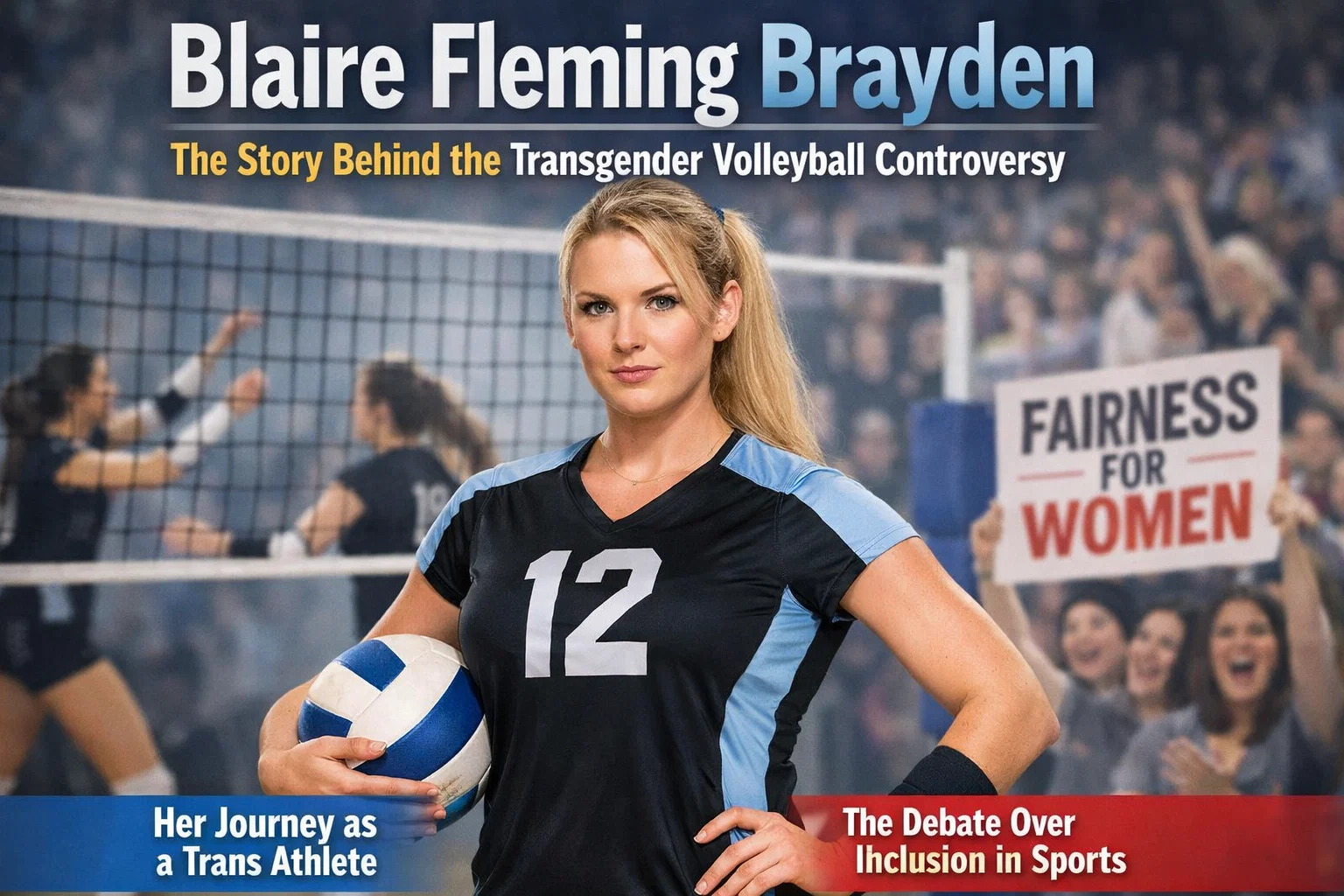
Blaire Fleming Brayden has become one of the most talked-about names in college sports over the past couple of years. This 6-foot-1 outside hitter from Virginia found herself at the center of a fierce national conversation about fairness, identity, and the future of women’s athletics. Whether you’re a die-hard volleyball fan or just someone curious about how gender and sports intersect, the story of Blaire Fleming Brayden offers plenty to unpack.
What started as a relatively quiet college career quickly exploded into headlines when details about her background surfaced. People began searching for “Blaire Fleming Brayden” to understand the full picture—her transition, her impressive on-court performances, and the ripple effects that touched teammates, opponents, and even politicians. It’s a tale that highlights both personal courage and tough questions about biology, opportunity, and competition.
In this deep dive, we’ll explore every angle of Blaire Fleming Brayden’s experiences. From her early days swinging a volleyball in Virginia to the intense scrutiny at San Jose State University, there’s a lot more here than simple headlines suggest. Let’s break it down step by step so you can form your own informed view.
Who Is Blaire Fleming Brayden?
Blaire Fleming Brayden grew up in Aldie, Virginia, a suburban area not far from Washington, D.C. Born Brayden, she began her transition during her teenage years and has since lived and competed as Blaire. Standing tall at 6’1″, she possesses the physical attributes that make for a formidable volleyball player—reach, power, and athleticism that turned heads from high school onward.
Her story isn’t just about sports stats. It’s about a young person navigating identity in a world that often demands quick labels. Blaire Fleming Brayden attended John Champe High School, where she helped lead the girls’ volleyball team to remarkable success. She set school records and earned all-district honors, showing early on that she had serious talent.
Friends and coaches from those days describe her as dedicated and competitive. Volleyball wasn’t just a game for her; it was a passion that carried her through personal changes. When she stepped onto college courts, first at Coastal Carolina and later at San Jose State, Blaire Fleming Brayden brought that same drive, but the spotlight grew much brighter.
Today, searches for Blaire Fleming Brayden often mix admiration for her skills with debates about eligibility rules. She’s become a symbol for different groups—some see her as a trailblazer pushing for inclusion, while others view her participation as a challenge to the integrity of women’s categories in sports.
Early Life and Path to Volleyball
Life in Aldie provided Blaire Fleming Brayden with a supportive environment to explore her interests. Like many kids in the area, she got involved in sports young. Volleyball clicked early, and she poured hours into training, refining her spikes and defensive skills.
High school brought breakthroughs. In her senior year, she helped John Champe achieve a historic 19-win season. She posted eye-popping numbers, including a single-season record of 266 kills and a single-game high of 30 kills. These accomplishments weren’t just numbers on a stat sheet—they represented countless practices, sweat, and determination.
During these years, Blaire Fleming Brayden also began her personal transition. Around age 14, she had what she later described as a “lightbulb moment” realizing her gender identity. With family support, she worked with therapists and doctors to transition socially and medically. This period shaped her profoundly, giving her a sense of relief but also introducing new complexities as she balanced athletics and self-discovery.
Volleyball offered an outlet during this time. The court became a place where she could focus on performance rather than external judgments. Her high school coach and teammates witnessed her growth both as an athlete and as a person finding her path.
High School Dominance and Records
Blaire Fleming Brayden’s high school career stands out for its consistency and flair. She wasn’t just participating—she was dominating. That record-setting senior season at John Champe remains a point of pride. Opponents struggled to contain her powerful attacks and versatile play from the outside hitter position.
Scouts took notice. Her leaping ability and spike speed made her a coveted recruit despite the COVID-disrupted landscape. Videos from those years show a player with excellent timing and court awareness, qualities that would translate well to the college level.
Beyond the stats, Blaire Fleming Brayden built relationships in the volleyball community. She earned team MVP honors and helped her squad reach regional playoffs. These experiences laid the foundation for her college journey and taught her resilience that would prove valuable later.
Even then, her physical presence stood out. At 6’1″, she had an advantage in blocking and attacking that few peers matched. This natural athletic build, combined with hard work, fueled her success and later fueled much of the discussion around Blaire Fleming Brayden in women’s volleyball.
College Beginnings at Coastal Carolina
Blaire Fleming Brayden started her collegiate career at Coastal Carolina University in 2020. As a true freshman, she saw action in 10 matches and 22 sets. She averaged 1.86 kills per set, ranking third on the team, and delivered a standout performance in the Sun Belt Conference tournament championship game with 12 kills.
The season was shortened and altered by the pandemic, but she made the most of her opportunities. Her debut showed promise, blending power with growing experience. Coastal Carolina gave her a platform to develop further as both a student and athlete.
After that initial year, Blaire Fleming Brayden entered the transfer portal. Factors including state legislation around transgender participation played a role in her decision to seek a new program. She ultimately landed at San Jose State University in California, where policies aligned more closely with her identity.
This move marked a new chapter. The Mountain West Conference offered fresh competition and a chance to contribute to a rebuilding program. Little did she know at the time how much attention her presence would eventually draw.
Transfer to San Jose State and Adaptation
Arriving at SJSU in 2022, Blaire Fleming Brayden quickly integrated into the Spartans’ system. Under the coaching staff, she flourished as an outside hitter and right-side player. In her first full season there, she appeared in 27 matches and 106 sets, posting an impressive 2.93 kills per set average.
Her debut game against Weber State saw her lead the team with 18 kills on efficient hitting. Season highlights included a 20-kill performance at UNLV, showcasing her ability to take over matches when needed. She also contributed defensively with blocks and digs, rounding out her all-around game.
Adapting to a new team, new conference, and new environment wasn’t easy, but Blaire Fleming Brayden embraced it. Teammates noted her work ethic and positive attitude in practices. The full scholarship she received reflected the coaches’ belief in her potential to elevate the program.
By 2024, she had become a key leader on the court. Her stats climbed, with reports of over 250 kills in a single season despite a disrupted schedule. Blaire Fleming Brayden helped the Spartans reach conference tournament finals, aided in part by opponent forfeits that became part of the larger story.
Rising Through the Ranks at SJSU
At San Jose State, Blaire Fleming Brayden evolved from solid contributor to standout performer. Her hitting percentage stayed strong, and she consistently ranked among conference leaders in kills per set. One memorable match against Colorado State featured 24 kills and a clutch service ace to seal the win in five sets.
Coaches praised her versatility and leadership. Paired with teammates like Brooke Slusser, she formed a potent attacking duo that opponents feared. The team achieved third-best hitting percentage in the conference during key stretches, thanks in part to her contributions.
Off the court, Blaire Fleming Brayden maintained a relatively low profile on social media, focusing on volleyball and studies. Her Instagram offered glimpses into life as a student-athlete—travel, training, and occasional personal moments—but avoided much of the growing public noise.
This period of growth highlighted her dedication. Despite external pressures, she kept showing up and performing at a high level, earning all-conference honorable mention recognition.
Quote: In a later reflection shared publicly, Blaire Fleming Brayden described parts of her senior season as “the darkest time of my life,” capturing the emotional toll of sudden fame and scrutiny.
The Spark of Controversy in 2024
The national spotlight hit Blaire Fleming Brayden hard in 2024 when independent reporting revealed her background as a transgender athlete who had transitioned after being born male. This disclosure ignited debates that extended far beyond the volleyball court.
Opponents and advocacy groups raised concerns about physical advantages. Biological males, even after hormone therapy, often retain greater muscle mass, bone density, lung capacity, and skeletal structure that can influence performance in power-based sports like volleyball. Studies in exercise physiology support these differences, with testosterone suppression not fully eliminating them in many cases.
Teams began forfeiting matches against SJSU. At least five schools canceled or forfeited eight games, citing fairness and safety. Boise State notably walked away from a conference tournament semifinal. These actions amplified the conversation around Blaire Fleming Brayden and policies allowing transgender women in female categories.
Politicians weighed in too. Then-candidate Donald Trump referenced a powerful spike during a town hall, emphasizing his stance against males competing in women’s sports. The controversy became a flashpoint in broader cultural discussions.
Teammate Reactions and Legal Battles
Inside the SJSU locker room, tensions rose. Some teammates, including co-captain Brooke Slusser, expressed discomfort and filed complaints. Lawsuits emerged alleging lost opportunities, unequal treatment, and safety risks. One filing referenced an alleged conversation where Blaire Fleming Brayden reportedly discussed scenarios that raised concerns among players.
These developments fractured team dynamics. Coaches faced internal divisions, with suspensions and investigations following. Players reported feeling caught between supporting a teammate and advocating for what they saw as fair competition.
Blaire Fleming Brayden maintained that she followed all NCAA and conference rules. She later opened up about the isolation and stress, noting how the team nearly came apart. The legal actions highlighted deeper questions about Title IX protections for biological females.
A federal judge ultimately ruled on eligibility for tournament play, allowing Blaire Fleming Brayden to participate while debates continued in courtrooms and public forums.
Forfeits, Boycotts, and On-Court Impact
The wave of forfeits created an unusual season for SJSU. While some matches were won by default, others proceeded with heightened security—armed police present due to threats. This environment added pressure for everyone involved, including Blaire Fleming Brayden.
Critics argued that forfeits undermined the spirit of competition and deprived female athletes of valuable experience. Supporters of inclusion pointed to mental health impacts on transgender athletes facing backlash.
Throughout it all, Blaire Fleming Brayden kept competing when games happened. Her performances remained strong, but the narrative shifted from pure athletics to symbolism. The situation underscored challenges in balancing inclusion with competitive equity.
Media Coverage and Shifting Public Views
News outlets covered the Blaire Fleming Brayden story from multiple angles. Some focused on her personal journey and resilience, while others emphasized data on performance gaps between biological sexes. Conservative voices highlighted preservation of women’s sports; progressive ones stressed dignity and anti-discrimination.
Social media exploded with opinions. Hashtags and viral clips kept the topic trending. Blaire Fleming Brayden largely stayed silent initially but eventually shared her perspective in a major interview.
Public opinion remains divided. Polls often show majority support for sex-based categories in elite sports, reflecting concerns over fairness for biological women who train their entire lives for these opportunities.
Scientific Perspective on Biological Advantages
Science plays a central role in these discussions. Research from sports medicine shows that post-puberty males typically develop 30-60% greater upper body strength, higher testosterone levels (even suppressed), and structural advantages like broader shoulders and narrower hips for better leverage in spiking and jumping.
Hormone therapy helps with some metrics but doesn’t reverse all differences, particularly in bone length and muscle fiber composition. Organizations like World Athletics and swimming governing bodies have implemented stricter rules based on this evidence, restricting transgender women from certain female events.
In volleyball, where vertical leap and spike velocity matter hugely, these factors can create meaningful disparities. Blaire Fleming Brayden’s 80 mph spikes, as alleged by some teammates, illustrate the kind of power that stands out.
Experts continue studying optimal policies—some suggest open categories or case-by-case reviews, but consensus leans toward protecting female-only spaces for fairness.
Quote: “Do I think I’m the last? No. There are going to be trans people in sports,” Blaire Fleming Brayden said in her New York Times conversation, acknowledging the ongoing nature of these issues.
The Role of Title IX and Recent Rulings
Title IX, the 1972 law ensuring equal opportunities in education and sports, became central to the Blaire Fleming Brayden saga. Originally designed to advance women’s athletics, recent interpretations expanded to include gender identity.
In early 2026, the U.S. Department of Education ruled that SJSU violated Title IX by allowing Blaire Fleming Brayden to compete on the women’s team. The finding cited harm to female athletes in fairness, safety, and opportunities like scholarships and playing time. The university received a short window to respond and address compliance.
This decision echoed similar findings in other cases, such as the University of Pennsylvania swimming situation. It signals a potential shift toward biology-based eligibility in federally funded programs.
Advocates on both sides watch closely. Supporters of the ruling see it as restoring original intent of Title IX. Others worry it marginalizes transgender participants.
Blaire Fleming Brayden’s Personal Reflections
In her first major public comments, shared through written exchanges and interviews, Blaire Fleming Brayden described transitioning as a profound relief. She recalled feeling authentic after starting the process at 14 with family and medical guidance.
The 2024 season tested her deeply. She called it the darkest period of her life amid outing, threats, and team strain. Despite this, she expressed hope for future trans athletes and gratitude for supportive moments.
Her story humanizes the debate. Blaire Fleming Brayden isn’t just a headline—she’s a person who loves volleyball and navigated complex personal challenges while pursuing excellence.
Impact on Women’s Volleyball and Broader Sports
The Blaire Fleming Brayden case has prompted reviews across conferences and the NCAA. More schools and leagues are examining policies to ensure competitive balance. Women’s volleyball, in particular, has seen heightened awareness around roster decisions and match scheduling.
Young female athletes and parents express concerns about scholarships and roster spots potentially affected. At the same time, discussions about mental health for all involved have gained traction.
The ripple effects extend to other sports—swimming, track, cycling, and combat sports—where similar questions arise. Blaire Fleming Brayden’s experience serves as a case study in the complexities of modern athletics.
| Season | Team | Matches Played | Sets Played | Kills | Kills Per Set | Notable Highlights |
|---|---|---|---|---|---|---|
| 2020 | Coastal Carolina | 10 | 22 | ~41 | 1.86 | 12 kills in conference championship game |
| 2022 | San Jose State | 27 | 106 | ~311 | 2.93 | 20 kills vs UNLV; strong debut |
| 2024 | San Jose State | 21+ | Varies | 252+ | ~3.0+ (est.) | All-conference honorable mention; key wins despite forfeits |
This table summarizes available career highlights for Blaire Fleming Brayden, showing consistent production across levels.
Looking Ahead: The Future of Inclusion in Sports
As policies evolve, the sports world seeks solutions that honor both inclusion and fairness. Ideas include hormone thresholds, separate divisions, or technology-assisted categories. Blaire Fleming Brayden’s story will likely influence these conversations for years.
For now, she continues focusing on life after college volleyball. Her resilience inspires some while prompting reflection in others about balancing empathy with evidence-based rules.
The debate around athletes like Blaire Fleming Brayden reminds us that sports reflect society—full of passion, progress, and difficult trade-offs.
Blaire Fleming Brayden’s volleyball career and the surrounding events have sparked essential dialogues. From record-setting high school performances to navigating college controversies, her path illustrates the human side of policy debates. As more data emerges and rulings shape the landscape, one thing remains clear: finding equitable solutions benefits everyone who steps onto the court.
Conclusion
Wrapping up this exploration of Blaire Fleming Brayden reveals a multifaceted narrative. Her achievements on the volleyball court demonstrate talent and perseverance, while the broader controversy underscores ongoing tensions in defining fair competition. Whether you support greater inclusion or prioritize biological categories, the story of Blaire Fleming Brayden encourages thoughtful consideration of science, ethics, and athlete well-being. As sports adapt, cases like this will continue guiding the way toward balanced approaches that respect all participants. The conversation around Blaire Fleming Brayden is far from over, but it has already left a lasting mark on college athletics.
FAQ
What is the background of Blaire Fleming Brayden?
Blaire Fleming Brayden is a volleyball player who competed at the NCAA Division I level, most notably for San Jose State University. Originally from Virginia and known earlier in life as Brayden, she transitioned as a teenager and has advocated for her place in women’s sports while facing significant public attention.
Why did Blaire Fleming Brayden become so controversial in women’s volleyball?
The controversy stems from her status as a transgender woman competing in female categories. Many argue that retained physical advantages from male puberty create unfair matchups and safety concerns, leading to forfeits, lawsuits, and national debate.
What was the outcome of the Title IX investigation involving Blaire Fleming Brayden?
The U.S. Department of Education found San Jose State in violation of Title IX for allowing Blaire Fleming Brayden to compete on the women’s team, citing harms to biological female athletes in fairness and opportunity. The school was directed to address the issues.
How did teammates react to playing with Blaire Fleming Brayden?
Reactions varied. Some supported her, while others, including co-captain Brooke Slusser, raised concerns about fairness and filed complaints. The situation led to team divisions, investigations, and legal actions from multiple players.
What has Blaire Fleming Brayden said about her experiences?
In interviews, including with the New York Times, Blaire Fleming Brayden described her transition as liberating but called her senior season the “darkest time” of her life due to the intense scrutiny and team tensions. She remains hopeful about future trans participation in sports.
Will there be more athletes like Blaire Fleming Brayden in college volleyball?
She has suggested yes, noting that transgender individuals will continue pursuing sports. This prediction fuels ongoing policy discussions at the NCAA and conference levels about eligibility standards.
