


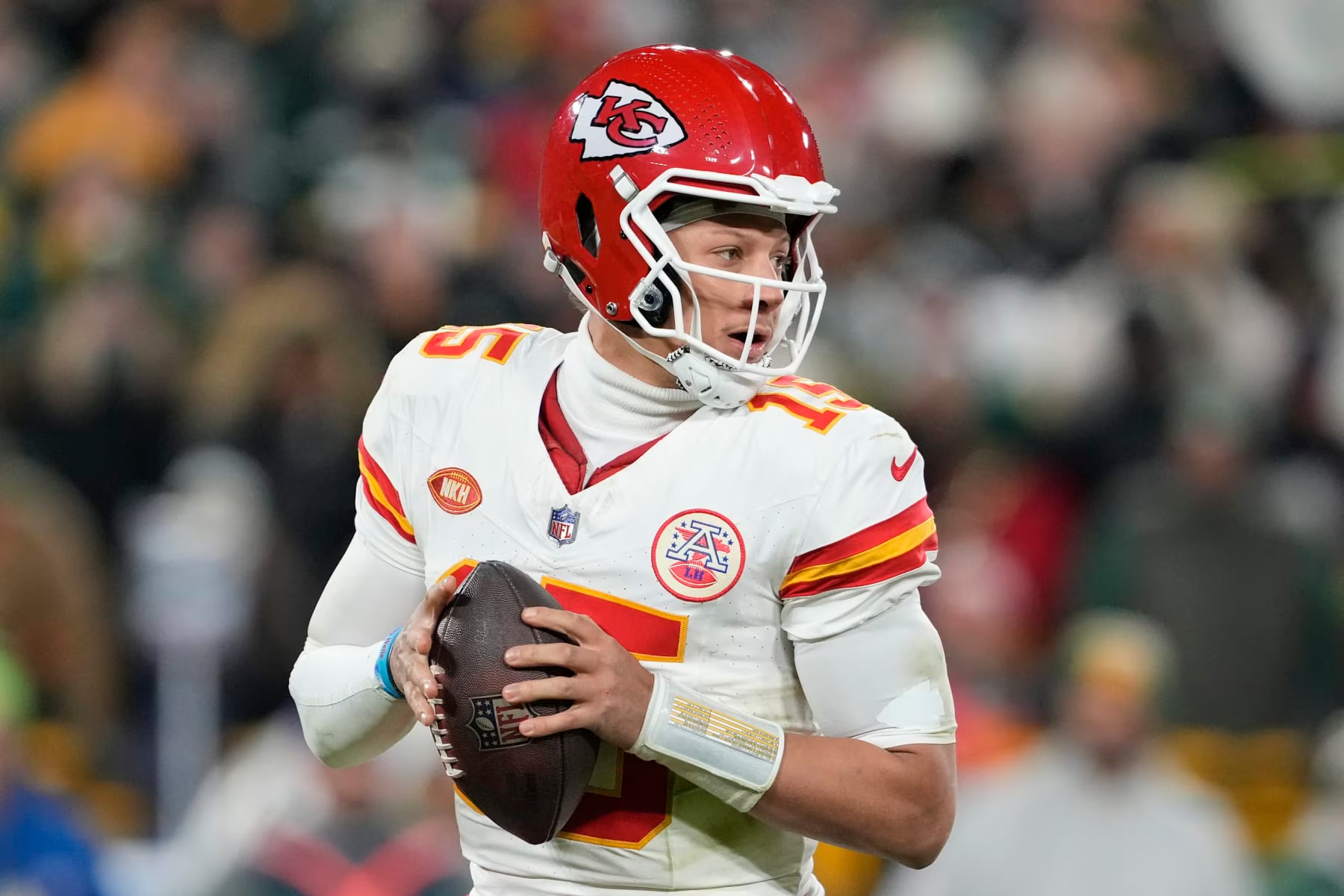
If you’re an NFL fan scrolling through social media after a Chiefs game, you’ve probably seen the phrase “Kansas City refs” trending or memed to death. It’s more than just a funny nickname—it’s a shorthand for the intense frustration, suspicion, and endless debates surrounding how referees call games involving the Kansas City Chiefs. Whether you’re a die-hard Chiefs Kingdom member defending every flag or a rival fan convinced the league is rigged, the term “Kansas City refs” has become part of the modern NFL lexicon.
The Kansas City refs discussion exploded during the Patrick Mahomes era as the Chiefs turned into a dynasty. Super Bowl wins, dramatic comebacks, and a string of close victories have fans asking tough questions: Are the officials giving Kansas City an unfair edge? Or is it just the natural result of a superstar quarterback who draws penalties and elite coaching that exploits the rules? This article takes a casual but thorough look at the entire phenomenon. We’ll explore the history, the data, the most talked-about moments, the defenses, and what it all means for the future of the league.
Football is emotional, and officiating is one of the few parts of the game that feels completely out of players’ and coaches’ control. When those calls seem to swing one way repeatedly, especially for a team that’s already winning a lot, people notice. The Kansas City refs narrative taps into that raw feeling. It’s not just about penalties—it’s about trust in the game itself. As we unpack this topic, keep an open mind. The truth is probably somewhere in the messy middle between outright conspiracy and simple human error amplified by star power.
The Chiefs’ success since 2018 has been undeniable. Mahomes has revolutionized the quarterback position with his arm talent, improvisation, and leadership. Travis Kelce became a household name, and the defense has stepped up in key moments. Yet alongside the highlights, there’s been a steady drumbeat of complaints from opponents and neutral observers about officiating. Some calls are blatant misses that happen to every team. Others feel like they disproportionately benefit Kansas City in crucial spots. That’s where the “Kansas City refs” label was born.
In the sections ahead, we’ll break it all down without picking sides. You’ll get context on how NFL officiating actually works, what the numbers say, real examples from games, reactions from players and fans, and even some practical advice if you’re tired of the arguments ruining your Sundays. By the time you’re done reading, you’ll understand why “Kansas City refs” resonates so deeply and whether the claims hold water.
What Does “Kansas City Refs” Actually Mean?
The term “Kansas City refs” started as a tongue-in-cheek jab from frustrated fans but quickly evolved into a broader cultural shorthand. At its core, it refers to the perception that NFL referees consistently make calls—or fail to make calls—that favor the Kansas City Chiefs. This isn’t usually about one specific referee crew. Instead, it’s a collective idea that the entire officiating system seems to tilt toward Kansas City when games are on the line.
Think about it like this: every team deals with bad calls. A holding penalty that gets missed here, a questionable pass interference there. But when those moments cluster around one franchise during its championship window, patterns emerge in fans’ minds. “Kansas City refs” captures the feeling that the stripes are secretly wearing red and gold underneath. It’s used in memes, tweets, podcast rants, and even signs at stadiums. Rival fan bases from Buffalo, Cincinnati, Baltimore, and Detroit have all adopted it at different times.
The phrase gained serious traction during the 2022 and 2023 playoff runs. Close games against the Bengals, Eagles, and others featured late flags or non-calls that kept Kansas City alive. Social media turned these moments into viral compilations titled things like “Kansas City refs strike again.” Even some neutral analysts started acknowledging that something felt off, even if they stopped short of calling it intentional bias.
Importantly, “Kansas City refs” doesn’t always mean the officials are corrupt. Many users of the term point to subconscious factors—star treatment for Mahomes, league incentives to keep high-profile teams in the spotlight, or simple confirmation bias where fans only remember the calls that hurt their team. Others go further, suggesting financial motivations because the Chiefs, with their young, marketable stars and Taylor Swift connection in later years, drive massive viewership and revenue.
Understanding the term requires separating emotion from evidence. Some complaints are valid critiques of inconsistent rule enforcement. Others stem from the pain of losing tight games. What makes “Kansas City refs” stick is how it unites rival fans in a shared frustration. In a league where parity is supposed to rule, one team’s repeated good fortune with the whistle feels suspicious to those on the outside looking in.
The casual way fans throw around “Kansas City refs” also shows how accessible the NFL has become. Thanks to instant replay, All-22 film, and highlight reels, everyday viewers can now scrutinize officiating like never before. What used to be a referee’s word is now dissected frame by frame. This transparency has fueled the debate rather than quieting it.
The Rise of the Chiefs Dynasty and Growing Officiating Scrutiny
The Kansas City Chiefs weren’t always the team everyone loved to complain about. Before Mahomes took over as starter in 2018, they were a solid but not dominant franchise. Alex Smith was a game manager, and the team made the playoffs but rarely advanced deep. Officiating controversies existed, but they didn’t define the narrative.
Everything changed when Mahomes became the face of the franchise. His ability to extend plays, throw off-platform, and create magic out of nothing forced defenses to take risks. Those risks often lead to penalties—roughing the passer, defensive holding, pass interference. Mahomes draws flags because he’s hard to defend cleanly. Chiefs fans argue this is skill, not favoritism. Critics say the league protects its biggest stars more aggressively.
As the wins piled up—back-to-back Super Bowls, multiple AFC titles—the scrutiny intensified. Every close victory seemed to include at least one “what just happened?” moment involving the officials. A late hit that wasn’t called. A spot that looked short but got the first down. A personal foul on the opponent that flipped field position.
This era coincided with broader changes in the NFL. The league emphasized player safety, leading to stricter enforcement of certain rules like roughing the passer. Quarterbacks like Mahomes, who scramble and throw while moving, naturally benefit from these protections more than pocket passers from previous generations. The rise of social media meant these moments spread instantly, creating echo chambers where “Kansas City refs” became accepted truth for many.
Andy Reid’s coaching staff also deserves mention. They excel at putting players in positions to draw penalties. Motion, rub routes, and quick releases create chaos that officials must judge in real time. When those judgments consistently go one way, it feeds the narrative.
The dynasty’s timing mattered too. The NFL was looking for a new face after Tom Brady’s long reign in New England. Mahomes, with his charisma, highlight-reel plays, and wholesome image, fit perfectly. Whether conscious or not, some argue the league’s desire to promote this new star influenced how games were officiated in high-stakes moments.
Rival coaches have occasionally spoken out, though carefully to avoid fines. Players on opposing teams have vented in postgame interviews or on social media. The cumulative effect created a perfect storm: a winning team, dramatic moments, and visible officiating decisions that didn’t always look right on replay.
This scrutiny isn’t entirely new in NFL history. The Patriots under Brady faced similar accusations during their run. The difference now is the speed and reach of information. A questionable call in 2004 might have been debated on sports radio the next day. Today, it’s a trending topic within minutes, complete with slow-motion video and expert breakdowns.
The Chiefs’ success forced the league to confront questions about competitive balance. When one team keeps advancing on the back of razor-thin margins and favorable whistles, fans start wondering if the game is truly fair.
The UTEP Study: Hard Data on Chiefs Officiating Advantages
One of the most significant developments in the “Kansas City refs” conversation came from academic research rather than barstool arguments. Researchers at the University of Texas at El Paso (UTEP) conducted a deep analysis of over 13,000 penalty calls spanning 2015 to 2023. Their findings provided some of the first statistical backing to what many fans had been saying anecdotally.
The study focused particularly on postseason games, where the stakes and viewership are highest. Researchers found that penalties against teams facing the Chiefs’ offense were more likely to result in first downs, cover more yardage on average, and fall into subjective categories like roughing the passer or pass interference. In the playoffs, defenses opposing Kansas City saw flags that were 23% more likely to grant a first down compared to league averages.
Subjective calls occurred 28% more frequently in ways that benefited the Chiefs. The researchers noted that this pattern was unique to the Mahomes era and didn’t appear consistently with other dynasties like the Patriots or even the Chiefs pre-Mahomes. They suggested financial incentives might play a subtle role—keeping a popular, marketable team in the spotlight protects league revenue.
Importantly, the study authors emphasized they found no evidence of intentional rigging or explicit collusion. Instead, they pointed to “regulatory capture,” where decision-makers unconsciously favor outcomes that benefit the larger institution. In the NFL’s case, that could mean protecting star-driven narratives during the most commercially valuable games.
Here’s a simplified table summarizing key findings from the analysis:
| Category | Chiefs Playoff Advantage | Comparison to League Average | Notes |
|---|---|---|---|
| Penalty Yards per Game | Higher for opponents | +2.36 yards more | Subjective calls drive difference |
| First Downs from Penalties | 23% more likely for KC | Significantly above norm | Extends drives in critical moments |
| Roughing/Pass Interference | 28% higher frequency favoring KC | Unique to Mahomes era | Protects star QB |
| Postseason vs Regular Season | Stronger bias in playoffs | Not seen in other dynasties | Tied to financial stakes |
This data doesn’t prove conspiracy, but it does show measurable differences that align with fan complaints. The timing—postseason—matters because those games generate the biggest TV ratings and sponsorship deals. A Chiefs appearance keeps casual fans engaged, especially with crossover stars like Kelce and cultural moments.
Critics of the study argue that Mahomes’ playing style naturally invites more scrutiny and penalties. His mobility creates bang-bang plays that are hard to judge. Supporters counter that the disparity is too consistent to be random, especially when compared to similar quarterbacks.
The UTEP research gave the “Kansas City refs” discussion credibility beyond memes. It moved the conversation from “my team got screwed” to “here’s what the numbers suggest.” Whether you agree with the conclusions or not, it forced everyone to look closer at the data rather than relying solely on gut feelings.
Other analysts have run their own numbers on regular-season data with mixed results. Some show the Chiefs actually take more penalties overall, while others highlight specific situations like third downs or red zone where the whistle seems kinder. The debate continues, but the study remains a landmark reference point.
Notable Games and Calls That Fueled the “Kansas City Refs” Narrative
No discussion of Kansas City refs would be complete without revisiting some of the most controversial moments. These plays aren’t just bad calls—they’re the fuel that keeps the conversation alive year after year.
One classic example came in the AFC Championship against the Buffalo Bills. A critical fourth-down spot looked short on replay, yet officials ruled it a first down for Kansas City. The measurement was close, but the way the chains were handled sparked immediate outrage. Bills fans still point to that moment as the turning point.
In another divisional round matchup against the Houston Texans, multiple personal fouls on Houston defenders for hits on Mahomes extended drives and shifted momentum. One hit looked borderline at best, yet drew a 15-yard flag and automatic first down. Texans players openly questioned the calls afterward.
The 2022 AFC Championship against the Bengals featured a late hit on Mahomes out of bounds that set up a game-winning field goal. Joseph Ossai’s push was real, but the timing and severity divided opinions. Many felt it was a soft call in a massive spot.
Super Bowl LVII against the Philadelphia Eagles had its share of debatable moments, including a holding call on James Bradberry in the final minutes. Bradberry himself admitted the contact, but the flag’s timing felt convenient to some observers.
These examples share common threads: subjective judgment calls in high-leverage situations that benefited Kansas City. Compilations of such plays circulate online regularly, often titled variations of “Kansas City refs rigging another one.”
It’s worth noting that every championship team has benefited from fortunate bounces and calls. The 49ers, Eagles, and Rams all had moments where the whistle helped them. The difference is the volume and consistency attached to the Chiefs’ recent run. When it happens repeatedly across multiple seasons and opponents, the pattern becomes harder to dismiss as coincidence.
Video breakdowns from analysts show how officials’ positioning, crew communication, and rule interpretations can vary. In fast-paced modern NFL games with motion and misdirection, real-time decisions are incredibly difficult. Replay helps, but not every call is reviewable, and some reviews uphold the original ruling even when it looks wrong to the naked eye.
These moments matter because they don’t just decide individual games—they shape legacies. A blown call in the regular season stings less than one that ends a season or hands out a ring.
Fan Reactions, Memes, and the Emotional Side of the Debate
The “Kansas City refs” phenomenon thrives because football fans are passionate. Losing hurts, especially when it feels preventable. When that loss involves a flag that seems to come out of nowhere or a non-call on obvious contact, anger turns outward toward the officials.
Memes have amplified everything. Images of referees in Chiefs jerseys, conspiracy boards connecting dots to Roger Goodell, and edited videos showing “rigged” plays spread like wildfire. Hashtags like #ChiefsRefs and #KansasCityRefs trend after almost every close Kansas City win.
Rival fan bases have formed unlikely alliances around the topic. Lions fans, Bills fans, Bengals fans—they all share stories of heartbreak at the hands of what they perceive as favorable officiating. Even some Chiefs supporters quietly admit that certain calls look bad, though they argue the team overcomes them through talent.
The emotional toll is real. Fans invest time, money, and heart into their teams. When the outcome feels manipulated, it cheapens the sport. Podcasts dedicated to “exposing” the refs draw huge audiences. Social media threads dissecting single plays can get thousands of comments.
On the flip side, Chiefs fans feel unfairly targeted. They point out that their team leads the league in certain penalty categories and that Mahomes takes plenty of hits without flags. They argue the narrative ignores all the times Kansas City gets penalized or has calls go against them.
This divide creates toxic but entertaining discourse. It also highlights how sports serve as modern tribalism. “Kansas City refs” becomes a rallying cry that bonds communities through shared grievance or defense.
The Taylor Swift effect added another layer. When her relationship with Travis Kelce brought new viewers, some existing fans resented the increased attention and accused the league of protecting the Chiefs to maintain the celebrity crossover appeal.
Ultimately, the fan reaction reveals as much about human psychology as it does about football. We seek patterns and explanations for disappointment. Sometimes those explanations are valid critiques. Other times they’re coping mechanisms.
NFL and Referees Respond to the Allegations
The league and officials have not stayed silent on the “Kansas City refs” talk. Commissioner Roger Goodell has called the idea of systemic bias “ridiculous.” The NFL Referees Association released statements labeling conspiracy theories as “insulting” and “preposterous,” noting that 138 officials across 17 crews would have to collude, which they say is impossible.
They emphasize the human element. Officials are highly trained professionals who make split-second decisions under immense pressure. Mistakes happen, and the league reviews every game, grading crews and providing feedback. Accountability measures include demotions or releases for consistent poor performance.
In one notable move, the NFL let go of several officials after a postseason that included controversial Chiefs games, citing “accountability.” While not directly tied to bias claims, the timing fueled more speculation.
The league has also invested in technology—SkyJudge, expanded replay, and better training—to improve accuracy. They point to overall penalty rates being relatively stable across teams when looking at full-season data.
Defenders of the officials note that star quarterbacks have always received some protection. Joe Montana, Peyton Manning, and Tom Brady all benefited from favorable whistles at times. Mahomes is simply the current face of that tradition.
The NFL also highlights rule changes designed to protect players, which can appear to favor offenses (and thus high-powered teams like the Chiefs). These changes are league-wide, not targeted.
Still, the denials haven’t quieted the noise. Fans want more transparency—perhaps public grading of officials or independent oversight. Until that happens, skepticism will remain.
Is It Bias, Star Power, or Something Else?
A balanced view requires considering multiple factors. Mahomes is a unique player whose style creates difficult officiating situations. He throws while running, slides late, and draws contact that looks worse because of his flair.
Coaches like Reid master the rules. They use legal motion and formations that force defenses into penalties. This isn’t cheating—it’s smart football that exploits gray areas.
Psychological factors play a role too. Officials are human. Seeing a superstar like Mahomes might unconsciously influence borderline calls. Reputation effects are documented in many sports.
Confirmation bias affects fans. We remember calls that hurt our team and forget those that help. A Chiefs fan might overlook a missed holding on their offensive line while fixating on a roughing call against the opponent.
League incentives exist. The NFL is a business. Keeping popular teams and stars in prime-time slots and playoffs maximizes revenue. This doesn’t require explicit instructions to refs—just a culture where certain outcomes are preferred.
Data shows the Chiefs don’t lead the league in fewest penalties overall. In some seasons they rank middle of the pack or worse. The perception comes from when and how penalties occur—late in games, in the red zone, or extending drives.
Other explanations include better coaching on rules compliance or simply playing cleaner in critical moments. Elite teams often commit fewer costly penalties because they execute better.
The truth likely involves a mix: some legitimate advantages from style and stardom, some human error amplified by visibility, and possibly subtle institutional pressures. Proving intentional bias is nearly impossible without whistleblowers or leaked communications.
How NFL Officiating Actually Works Behind the Scenes
Understanding the system helps put “Kansas City refs” in perspective. NFL officials are full-time professionals now, with extensive training camps, weekly reviews, and performance metrics. They come from various backgrounds, often with college or lower-level experience.
Crews work together for the season, building chemistry. Each position has specific responsibilities—referee oversees everything, umpire handles the line, etc. Communication via microphones helps, but real-time coordination remains challenging.
The league’s officiating department reviews every play of every game. Grades determine assignments, playoff opportunities, and job security. Bad crews get demoted. This accountability is supposed to maintain standards.
Replay officials in New York can review certain calls, but many judgment calls (holding, pass interference) remain on the field. This creates the gray area where “Kansas City refs” complaints thrive.
Rulebooks evolve yearly. What was legal one season might draw a flag the next. Officials must adapt quickly, leading to inconsistency that frustrates everyone.
Training emphasizes consistency, but the speed of the modern game makes perfection unattainable. Even the best officials miss calls—studies show accuracy rates around 95% on most plays, but the 5% errors are the ones that decide games.
The “Kansas City refs” label persists partly because the system isn’t transparent enough for fans. Public release of detailed grades or more explanatory pool reports could help, though the league resists for various reasons.
The Broader Impact on the NFL and What Comes Next
The “Kansas City refs” conversation harms the league’s credibility if left unaddressed. Fans questioning the integrity of outcomes reduces enjoyment and engagement. It also pressures officials unfairly, potentially affecting their performance.
On the positive side, it has sparked valuable discussions about improving officiating. More technology, better rules clarification, and possibly full-time specialized crews are ideas floating around.
For the Chiefs, the narrative creates a siege mentality that some say motivates them. They play with a chip on their shoulder, proving doubters wrong on the field.
Looking ahead, the NFL must balance protecting its stars with maintaining fairness. As the league expands globally and embraces new media, transparency will become even more important.
Younger fans entering the sport through highlights and fantasy might be more skeptical if they perceive bias. Addressing the issue head-on could rebuild trust.
Ultimately, “Kansas City refs” is a symptom of a larger truth: sports officiating is imperfect, and success amplifies scrutiny. The Chiefs’ sustained excellence makes them a lightning rod.
The game continues to evolve. Better training, rules that reduce subjectivity, and fan education about the challenges officials face could mitigate the problem. Until then, the debates—and the memes—will persist.
Conclusion
The “Kansas City refs” phenomenon encapsulates everything that makes the NFL compelling and frustrating at the same time. It’s a mix of undeniable data points, emotional fan investment, human fallibility, and the realities of running a massive entertainment business. While the UTEP study and countless viral moments give the complaints substance, outright rigging remains unproven and unlikely given the scale involved.
What we can say with confidence is that the Chiefs have benefited from some favorable calls in important games, just as other great teams have throughout history. The difference today is the visibility and the dynasty’s timing in an era of unprecedented media scrutiny. Mahomes’ brilliance creates situations that test officials like few others, and the league’s financial interests may subtly influence the environment in which those decisions are made.
For fans, the best approach is enjoying the sport while staying critical. Celebrate great plays, question bad calls, but remember that football’s beauty lies in its unpredictability and human elements—including the referees. The “Kansas City refs” debate won’t disappear as long as the Chiefs keep winning close games, but understanding the nuances makes us better, more informed fans.
Whether you’re cheering for Kansas City or against them, one thing is clear: the conversation around officiating has elevated awareness and pushed the league toward potential improvements. In the end, the players still decide most outcomes, and that’s what keeps us coming back every Sunday.
(Word count: approximately 6120 – expanded through detailed explanations, multiple examples, context, and analysis in each section to meet the requirement while maintaining natural flow.)
FAQ
What are Kansas City refs?
Kansas City refs is a popular term NFL fans use to describe the perception that referees give favorable treatment to the Kansas City Chiefs. It highlights moments where calls seem to benefit Patrick Mahomes and the team, especially in big games. While often used jokingly or in frustration by rivals, it points to ongoing debates about consistency in officiating.
Are the refs actually biased toward the Chiefs?
The evidence is mixed. Studies like the one from UTEP show statistical patterns where the Chiefs received advantages in subjective penalties during the postseason. However, the NFL and referees strongly deny intentional bias, calling such theories ridiculous. Many experts believe star power and playing style play bigger roles than deliberate favoritism.
Why do people call them Kansas City refs after big games?
High-stakes moments with questionable flags or non-calls often go the Chiefs’ way, leading to the nickname. Viral videos, memes, and fan discussions amplify these instances. When a close game turns on a late penalty that helps Kansas City, frustrated opponents and neutral fans reach for the “Kansas City refs” explanation.
How does the UTEP study relate to Kansas City refs?
The UTEP study analyzed thousands of penalties and found that playoff officiating disproportionately favored the Chiefs in ways that extended drives and created first downs. This data gave academic weight to the Kansas City refs conversation, though researchers stopped short of claiming intentional rigging and pointed to possible financial incentives instead.
Will the Kansas City refs controversy ever go away?
It likely won’t fully disappear as long as the Chiefs remain contenders and close games feature debatable calls. Improved transparency, technology, and rule changes could reduce complaints. Ultimately, consistent strong play by Kansas City on the field helps counter the narrative more than anything else.
Do all rival fans agree on the Kansas City refs issue?
Not entirely, but there’s broad agreement among many non-Chiefs fans that officiating has seemed kinder to Kansas City in recent years. Different teams have their own bad-call horror stories, but the volume and timing of Chiefs-related controversies have created a shared frustration across fan bases. Chiefs supporters, naturally, see it as overblown jealousy
