


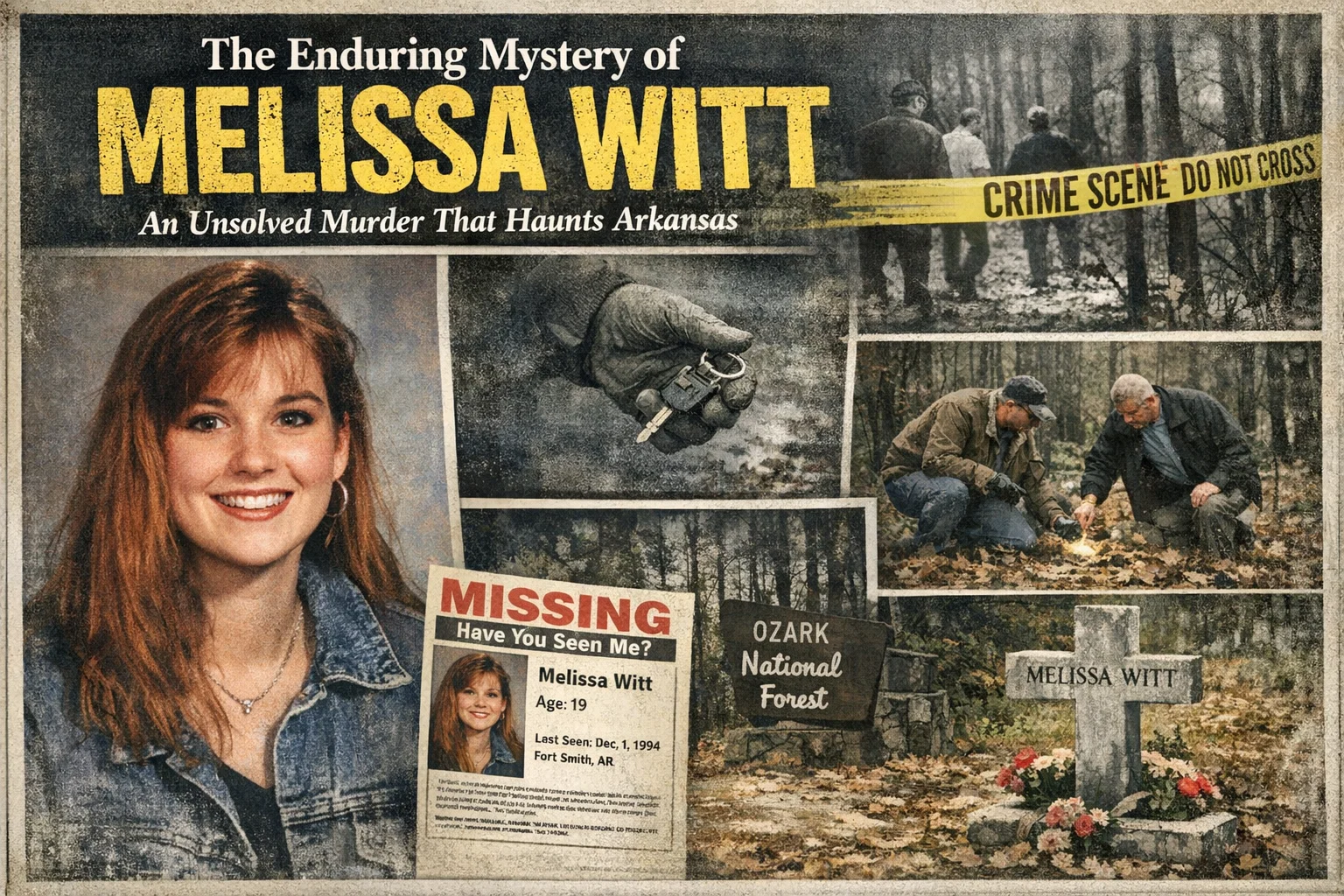
When you think about unsolved murders in Arkansas, few cases capture the imagination and heartbreak quite like that of Melissa Witt. This young woman, full of promise and ambition, vanished in a blink from a seemingly safe spot in Fort Smith, leaving behind a trail of questions that have puzzled investigators for decades. Her story isn’t just a footnote in true crime annals—it’s a reminder of how fragile life can be and how persistent the quest for justice remains, even after 30 years. Melissa Witt’s disappearance and murder have sparked books, documentaries, and endless speculation, drawing in amateur sleuths and professionals alike who refuse to let her name fade into obscurity.
What makes the Melissa Witt case so compelling is its blend of everyday normalcy shattered by unimaginable violence. She was just a teenager heading to surprise her mom at a local bowling alley, a place buzzing with laughter and friendly competition. Instead, she stepped into a nightmare that ended in the remote wilderness of the Ozark National Forest. As we peel back the layers of this tragedy, we’ll explore her life, the chilling details of her abduction, the twists in the investigation, and why this cold case continues to resonate with so many. Whether you’re a true crime enthusiast or someone drawn to stories of resilience and unresolved enigmas, Melissa Witt’s tale offers a deep dive into the human side of mystery.
Who Was Melissa Witt? A Portrait of a Bright Young Life Cut Short
Melissa Witt was the kind of young woman who seemed destined for great things, embodying the spirit of hard work and optimism that defines so many in small-town America. Born and raised in Fort Smith, Arkansas, she graduated from North Side High School in 1993 and quickly enrolled at Westark Community College, where she pursued studies to become a dental hygienist. Friends and family remember her as bubbly, responsible, and deeply connected to her roots—she lived at home with her mother, Mary Ann, on a quiet street, balancing school with part-time jobs. As a college ambassador, Melissa Witt recruited new students, showcasing her outgoing personality and dedication to her education. She wasn’t just going through the motions; she had big dreams, from building a stable career to nurturing close relationships with her parents.
Beyond her academic pursuits, Melissa Witt led a life filled with simple joys that painted her as relatable and endearing. She enjoyed the little things, like surprising her mom with visits or indulging in a quick hamburger when funds were low. Her involvement in community activities and her role as a hardworking student highlighted her as someone who valued family and ambition equally. Tragically, these qualities may have made her an unwitting target in a world where danger lurks in unexpected places. Even today, those who knew her speak of Melissa Witt with a mix of fondness and sorrow, emphasizing how her untimely death robbed the world of a vibrant soul. Related terms like “Arkansas cold case victims” or “young women unsolved murders” often bring her story to mind, underscoring the broader patterns in such heartbreaking incidents.
In reflecting on Melissa Witt’s character, it’s clear she represented the best of her generation—eager, kind, and forward-looking. Her story resonates because it’s not just about the crime; it’s about the person behind the headlines. She was more than a victim; she was a daughter, a student, and a friend whose potential was snuffed out far too soon. This human element keeps the Melissa Witt case alive in public consciousness, inspiring ongoing efforts to seek answers.
The Fateful Day: Melissa Witt’s Disappearance on December 1, 1994
December 1, 1994, started like any other ordinary day for Melissa Witt, but it would end in a disappearance that shocked the tight-knit community of Fort Smith, Arkansas. That evening, the 19-year-old decided to head to Bowling World, a popular local bowling alley, to surprise her mother, who was participating in a church league game. Running low on cash after a day of classes and work, Melissa Witt planned to ask her mom to buy her a hamburger—a small, innocent gesture that highlighted their close bond. She parked her car in the lot, but she never made it inside the building. What unfolded next was a scene of sudden violence: signs of a struggle were evident, with blood spattered in the parking area and inside her vehicle, along with a single earring and strands of hair suggesting she fought back fiercely.
The parking lot at Bowling World, usually a hub of casual arrivals and departures, became the epicenter of a mystery that evening. Witnesses later reported nothing out of the ordinary at first glance, but the evidence told a different story—a blood trail leading from the back of Melissa Witt’s car to where another vehicle had likely been parked. This “bad guy’s car,” as investigators dubbed it, hinted at an abduction executed with chilling efficiency. The keys were left behind, abandoned in the chaos, adding to the puzzle of why and how this happened in such a public place. Terms like “bowling alley abduction Arkansas” or “1994 unsolved disappearance” often surface in discussions of similar cases, drawing parallels to the vulnerability of everyday routines.
As night fell and Melissa Witt failed to appear, her mother’s worry turned to panic, sparking an immediate search by family and authorities. The community rallied, but initial efforts yielded no clues beyond the ominous signs at the scene. This day marked the beginning of a long, agonizing wait for answers, one that would stretch into weeks and then years. The simplicity of her plan—to share a moment with her mom—contrasts starkly with the horror that ensued, making Melissa Witt’s disappearance a cautionary tale about hidden dangers in familiar settings.
The Grim Discovery: Finding Melissa Witt’s Body in the Ozarks
Six weeks after Melissa Witt vanished, on January 13, 1995, two hunters stumbled upon a heartbreaking sight in the remote Ozark National Forest near Turner Bend in Franklin County, Arkansas—about 50 miles from Fort Smith. Her body was found nude along a desolate logging trail, a location so isolated it suggested the killer knew the area well and chose it deliberately to conceal the crime. Strangled and robbed of her clothes, shoes, and jewelry—including a distinctive gold Mickey Mouse watch—Melissa Witt’s remains bore the marks of a brutal assault, though details like possible sexual violation were handled discreetly by investigators. This discovery shifted the case from a missing person inquiry to a full-blown homicide investigation, amplifying the grief for her family and the urgency for law enforcement.
The Ozark National Forest, with its dense woods and rugged terrain, provided a stark backdrop to the tragedy, emphasizing how far the perpetrator went to hide evidence. No signs of struggle at the site indicated Melissa Witt was killed elsewhere and dumped there, a common tactic in such crimes to complicate forensics. Related keywords like “Ozark forest body dump” or “Arkansas wilderness murders” evoke the eerie isolation that has preserved many secrets in unsolved cases across the region. The hunters’ find, while accidental, brought a measure of closure in locating her, but it also opened a floodgate of questions about the killer’s methods and motives.
In the aftermath, the scene was meticulously processed by multiple agencies, including the Fort Smith Police and the FBI, who combed the area for clues. Yet, the remoteness worked against them, with weather and time eroding potential evidence. This moment in the Melissa Witt saga underscores the challenges of rural crime scenes, where nature itself can be an unwitting accomplice to concealment. The discovery, while devastating, fueled a renewed determination to uncover the truth.
The Investigation Unfolds: Piecing Together Clues in the Melissa Witt Case
From the outset, the investigation into Melissa Witt’s murder involved a collaborative effort among local police departments in Fort Smith, Crawford County, Sebastian County, and Van Buren, bolstered by FBI involvement. Lead detective JC Rider, now retired, spearheaded the probe, focusing on the blood trail and struggle signs at the bowling alley. Early on, they canvassed witnesses, including a short man with a mustache and glasses seen smoking nearby, and a couple with a young child who might have overheard the altercation. These details painted a picture of a brazen abduction in a semi-public space, prompting theories about an opportunistic predator or someone who knew Melissa Witt’s routine.
As years passed, the case evolved with technological advances, including DNA analysis that linked potential evidence to suspects. In 2019, FBI agents Rob Allen and Rueben Gay intensified scrutiny on a prime suspect, using K9 units to revisit the body site—27 years later—and detect lingering scents of decomposition. A cigarette filter from the Cambridge brand found there matched one at a location frequented by the suspect, adding a forensic layer to the puzzle. Searches for “cold case DNA breakthroughs Arkansas” often highlight similar evolutions, showing how patience and science can revive stalled inquiries.
Despite these efforts, challenges abounded: missing items like Melissa Witt’s Mickey Mouse watch remain unrecovered, potentially holding key fingerprints or DNA. The multi-agency approach ensured thoroughness, but the passage of time meant fading memories and lost leads. Still, the commitment persists, with rewards like the $29,000 offered for information leading to an arrest, keeping hope alive for resolution in this enduring enigma.
Key Evidence and Lingering Clues in the Melissa Witt Murder
Central to the Melissa Witt investigation is the blood trail discovered in the Bowling World parking lot, which investigators believe led from her car to the abductor’s vehicle. This “mysterious trail of blood,” as described by retired detective JC Rider, indicated a violent struggle where Melissa Witt was likely hit over the head before being dragged away. Inside her car, an earring, hair strands, and more blood corroborated the chaos, while her abandoned keys suggested she had no chance to escape. These physical traces form the foundation of the case, offering glimpses into the final moments of terror.
Another pivotal clue is the Cambridge-brand cigarette filter found at the body dump site in the Ozarks, later matched through DNA to items at a suspect’s hangout spot. A mattress cover also yielded genetic material, strengthening forensic ties. Melissa Witt’s missing belongings—her clothes, jewelry, and especially the gold Mickey Mouse watch—have become symbols of the unsolved puzzle, with appeals for their return potentially cracking the case wide open. Keywords such as “missing jewelry cold cases” or “forensic evidence unsolved murders” often connect to discussions on how such items can turn tides in investigations.
Beyond these, witness descriptions add intrigue: the man in the blue shirt and baseball cap smoking outside, or the couple with a child who may have witnessed something without realizing. These elements, combined with diary entries hinting at romantic entanglements, weave a complex web. While not all clues have panned out, they keep the Melissa Witt story dynamic, inviting fresh eyes to reinterpret the evidence.
| Date | Event |
|---|---|
| December 1, 1994 | Melissa Witt abducted from Bowling World parking lot in Fort Smith, Arkansas; blood and struggle signs found. |
| January 13, 1995 | Body discovered by hunters in Ozark National Forest, nude and strangled; clothes and jewelry missing. |
| Early 2000s | Suspect Charles Ray Vines convicted of other murders; deal offered for confession in Melissa Witt case, but denied. |
| 2019 | FBI intensifies investigation on Vines; DNA matches on cigarette filter and mattress cover; Vines dies without interview. |
| August 6, 2024 | Hulu docuseries “At Witt’s End: The Hunt for a Killer” premieres, unveiling new leads and footage. |
Suspects Emerge: Profiling Potential Killers in the Melissa Witt Case
Over the years, several individuals have come under scrutiny in the Melissa Witt murder, each bringing a mix of circumstantial evidence and chilling backstories. Charles Ray Vines, dubbed the River Valley Killer, tops the list—a Fort Smith resident with a history of violent crimes against women. Convicted in 2000 for raping and murdering 58-year-old Juanita Wofford and attacking a 16-year-old girl, Vines’ modus operandi mirrored aspects of Melissa Witt’s death: strangulation, stripping victims, and remote disposals. DNA from a cigarette filter and mattress cover near the body site linked him, as did maps he drew of the Ozarks and a work order just minutes from the dump location. A witness even recalled him wearing a bowling league shirt, tying him to the scene’s vibe.
Vines, who died in 2019 without confessing despite a plea deal offer to avoid death row, remains a focal point. FBI agent Rob Allen noted, “There was a lady who emailed a detective… she saw him wearing a bowling league shirt of some sort.” Another suspect, Travis Crouch, lived near Melissa Witt and had a long rap sheet including kidnapping and sexual assault; he’s currently imprisoned in Colorado but hasn’t been ruled out. Larry Swearingen, executed for another murder, was briefly considered due to similarities in his crimes, though no solid links emerged.
Then there’s the unnamed man mentioned in Melissa Witt’s diary, a romantic interest with a criminal history, as highlighted by author LaDonna Humphrey. She described him as “not somebody that was 10 years older than her,” emphasizing his free status today. These suspects illustrate the breadth of possibilities, from serial predators to personal acquaintances, keeping the case open to new interpretations. Searches for “River Valley Killer connections” or “Arkansas serial murders” often loop back to these figures, broadening the narrative.
Theories and Speculations Surrounding Melissa Witt’s Murder
Theories about who killed Melissa Witt range from random opportunism to targeted attacks, each fueled by the evidence at hand. One prevailing idea points to a serial killer like Charles Ray Vines, whose pattern of abducting and murdering women in the Arkansas region aligns closely with the details. His familiarity with the Ozarks and DNA ties suggest he stalked Bowling World, preying on lone women. This theory gains traction from connections to other local crimes, such as the 1995 disappearance of Morgan Nick in nearby Alma, where similarities in timing and location have prompted joint investigations.
Alternatively, some speculate a personal motive, drawing from Melissa Witt’s diary entries about a romantic entanglement. Author LaDonna Humphrey posits the killer could be this unnamed man, perhaps driven by jealousy or rejection, explaining the theft of personal items as trophies or to erase ties. Related phrases like “intimate partner violence unsolved cases” highlight how such dynamics often underpin mysteries. Another angle considers a botched robbery escalating to murder, given the stolen jewelry, though the remote dump site argues against impulsivity.
Speculation also includes broader conspiracies, like links to underground networks in the Ozarks, but these lack substantiation. What unites these theories is the absence of closure, inviting endless debate. As former reporter Charlene Shirk said, “She was everything we’re told to do as young people… and be a good kid,” underscoring the randomness that fuels wild ideas. Ultimately, these speculations keep the Melissa Witt case in the spotlight, pushing for breakthroughs.
The Emotional Impact: How Melissa Witt’s Death Affected Family and Community
The murder of Melissa Witt rippled through her family and the Fort Smith community, leaving scars that time has only partially healed. Her mother, Mary Ann, endured unimaginable grief, searching tirelessly for weeks before the body’s discovery shattered any lingering hope. Friends recall Mary Ann’s strength, but the void left by Melissa Witt’s absence was profound, turning holidays and milestones into reminders of loss. The community’s response was immediate and heartfelt—vigils, searches, and fundraisers united neighbors in solidarity, transforming a quiet town into a hub of collective mourning.
On a broader scale, Melissa Witt’s case heightened awareness of safety in everyday places like bowling alleys, prompting discussions on personal vigilance in Arkansas. Schools and groups emphasized buddy systems, while the unsolved status fostered a lingering unease. Detective Fran Hall reflected, “We later developed a suspect, Charles Ray Vines… when he tried to kill a 16-year-old girl,” highlighting how the case intertwined with other local terrors, amplifying fear. Terms like “community impact cold cases” capture this enduring effect, where one tragedy reshapes social fabrics.
Today, the impact manifests in advocacy, with books and docuseries keeping Melissa Witt’s memory alive. Her story inspires resilience, as family and friends channel pain into calls for justice, ensuring her legacy endures beyond the horror.
Recent Developments: New Leads and Media Attention in the Melissa Witt Case
In recent years, the Melissa Witt investigation has seen renewed vigor, particularly with the 2019 focus on Charles Ray Vines by the FBI. Agents conducted searches of his home and frequented spots post-death, uncovering DNA matches that reignited hope. Canine units revisited the Ozark site, detecting scents decades later, a testament to advancing forensic techniques. This push, detailed in reports, underscores how cold cases can warm with persistence.
The 2024 Hulu docuseries “At Witt’s End: The Hunt for a Killer,” executive produced by Ridley Scott, marks a major development, featuring never-before-seen footage and interviews. It explores Vines’ “reign of terror” and a shocking lead from the Morgan Nick case. LaDonna Humphrey, author of “The Girl I Never Knew,” shared, “I’m really excited and hopeful that the new docuseries will bring more eyes and more awareness to Melissa’s case.” Podcasts like “Morbid” and “Hell and Gone” have also amplified the story, drawing global interest.
These efforts, coupled with the $29,000 reward, keep tips flowing. Searches for “Melissa Witt docuseries updates” reflect growing public engagement, potentially leading to the breakthrough long awaited.
The Ongoing Quest for Justice in the Melissa Witt Murder
Three decades on, the pursuit of justice for Melissa Witt remains unwavering, with investigators vowing not to close the file until resolved. Appeals for information about her Mickey Mouse watch or witnesses from that night persist, as every detail could unlock the puzzle. The collaborative spirit among agencies—Fort Smith PD, FBI, and others—exemplifies dedication, blending old-school detective work with modern tools like genetic genealogy.
Community involvement plays a crucial role, with rewards incentivizing tips and media keeping pressure on. As JC Rider noted, “The trail led from the back of her car over to where the bad guy’s car was parked,” reminding us of the tangible clues still out there. Phrases like “tips for unsolved murders Arkansas” encourage public participation, vital in cold cases.
Hope endures that someone, somewhere, holds the key to naming Melissa Witt’s killer, bringing peace to her loved ones.
Conclusion
As we wrap up this exploration of the Melissa Witt case, it’s clear her story is more than a collection of facts—it’s a poignant reminder of lives interrupted and justice delayed. For 30 years, this unsolved murder has captivated and saddened, highlighting the tenacity of those seeking answers amid fading trails. Melissa Witt, with her dreams and warmth, deserves resolution, and while suspects like Vines cast long shadows, the truth may yet emerge.
Ultimately, her legacy inspires advocacy for cold case victims, urging us to remember the human stories behind the headlines. May the ongoing efforts finally bring closure, honoring Melissa Witt’s memory in the process.
FAQ
What Happened to Melissa Witt on December 1, 1994?
On that day, Melissa Witt headed to Bowling World in Fort Smith to surprise her mother at a church league game. She parked her car but never entered the building. Evidence suggests she was abducted in the parking lot after a violent struggle, with blood, an earring, and hair found in and around her vehicle. A blood trail led to where another car was likely parked, indicating she was taken by force. This event marked the start of one of Arkansas’s most enduring unsolved mysteries, with no immediate witnesses coming forward to identify the perpetrator. The abduction’s brazen nature in a public spot has puzzled experts, who believe the killer may have been watching the area.
The search for Melissa Witt began immediately, involving her family, community, and law enforcement. For weeks, hope lingered that she might be found alive, but the lack of ransom demands or sightings pointed to a grimmer outcome. This disappearance not only devastated her loved ones but also raised alarms about safety in familiar community spots, influencing how similar cases are approached today.
Who Are the Main Suspects in the Melissa Witt Murder Case?
Several individuals have been scrutinized in the Melissa Witt investigation, with Charles Ray Vines standing out due to his violent history. Known for murdering elderly women and attacking a teenager in the 1990s, Vines’ DNA was linked to evidence near the body site, including a cigarette filter. He denied involvement before dying in 2019, but his maps of the Ozarks and proximity to the dump location keep him a prime focus. Travis Crouch, another suspect, lived nearby and has a record of kidnapping and assault; he’s still imprisoned but not definitively connected.
Additionally, Larry Swearingen was considered for similarities to his convicted murder, though evidence didn’t solidify. An unnamed man from Melissa Witt’s diary, a romantic figure with criminal ties, adds a personal angle. These suspects illustrate the case’s complexity, blending serial predation with possible intimate motives, and continue to drive investigative efforts.
What Evidence Has Been Key in the Melissa Witt Investigation?
Key evidence includes the blood trail in the parking lot, suggesting Melissa Witt was dragged to another vehicle after being struck. Her car contained signs of struggle, like blood, hair, and an earring, while her keys were left behind. At the body site, a Cambridge cigarette filter yielded DNA linking to suspect Charles Ray Vines, alongside a mattress cover from his frequented area. Missing items, such as her gold Mickey Mouse watch, clothes, and jewelry, are believed to be trophies or disposed evidence.
Forensic advances, like K9 scent detection decades later, have revived leads. Witness descriptions of people near the scene—a man smoking or a couple with a child—remain unpursued fully. This evidence mix keeps the case active, with appeals for the watch’s return potentially providing breakthroughs.
How Has Media Attention Helped the Melissa Witt Case?
Media has been instrumental in keeping Melissa Witt’s story alive, from podcasts like “Morbid” detailing her life and suspects to books by LaDonna Humphrey exploring investigative depths. The 2024 Hulu docuseries “At Witt’s End: The Hunt for a Killer” unveiled new footage and leads, including ties to Morgan Nick’s disappearance, drawing global viewers and tips. These platforms humanize Melissa Witt, emphasizing her as a vibrant student rather than just a victim.
Such coverage pressures authorities and educates on cold cases, inspiring similar productions. As Humphrey noted, it brings “more eyes and more awareness,” potentially solving the puzzle through public engagement.
What Connections Exist Between Melissa Witt and Other Arkansas Cases?
The Melissa Witt case shares ties with Morgan Nick’s 1995 disappearance in nearby Alma, both involving young females in public spots during a similar timeframe. Investigations overlapped, with a lead from Nick’s case pointing to Melissa Witt’s killer. Charles Ray Vines, suspected in Melissa Witt’s murder, was probed for other local attacks, including the murder of Juanita Wofford and an assault on a teen, suggesting a pattern of terror in the River Valley.
These links highlight regional vulnerabilities in the 1990s, with shared forensic resources aiding probes. While not proven, the similarities fuel theories of a connected predator, broadening the scope of justice efforts.
