


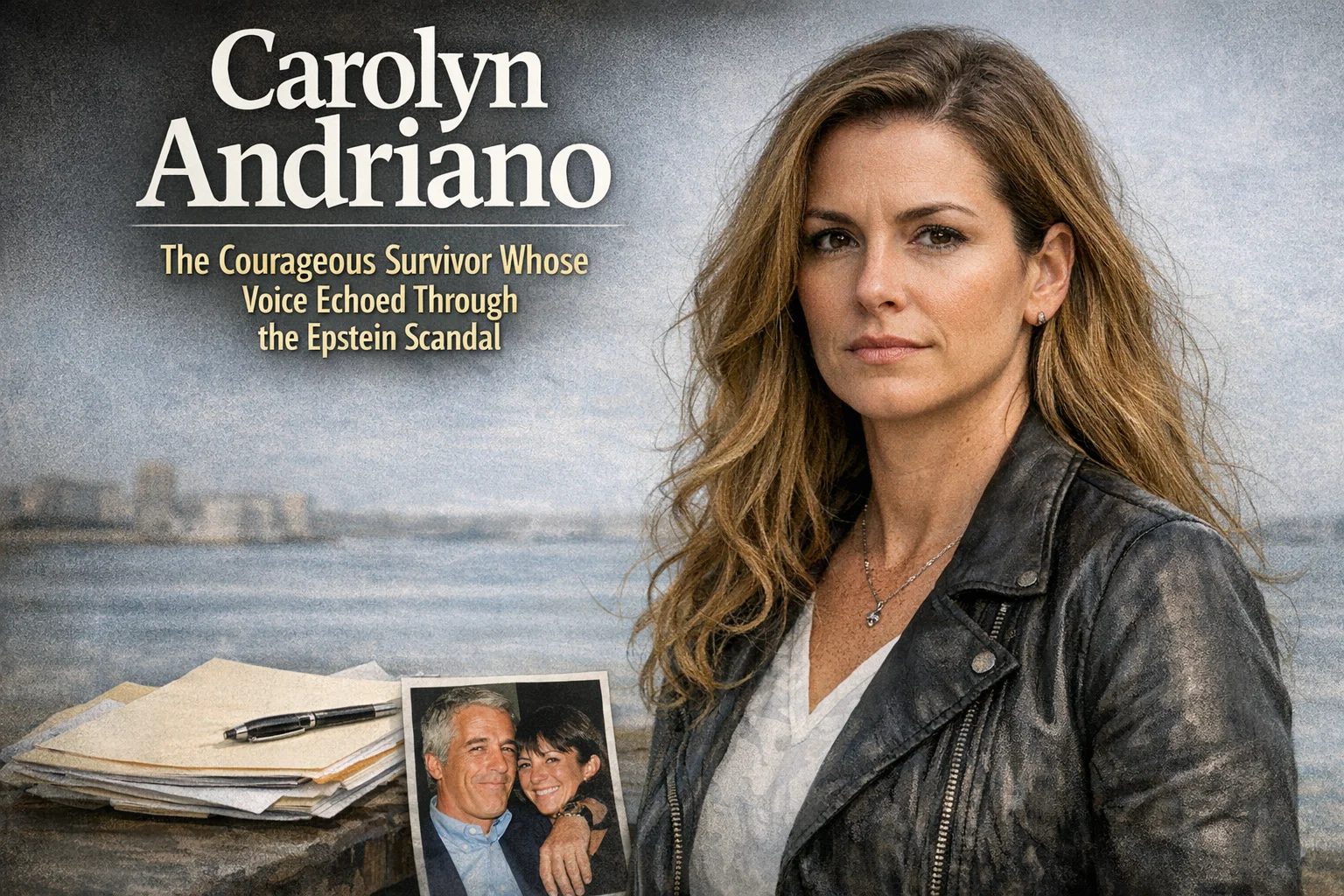
Carolyn Andriano was a woman whose life story intertwined profound bravery with heartbreaking tragedy. From a young teenager drawn into one of the most notorious abuse networks in modern history to a mother of five who stood tall in a courtroom to help deliver justice, her journey touched the hearts of many. People searching for details about Carolyn Andriano often seek to understand not just the events that shaped her but the resilience she showed despite unimaginable pain. Her testimony in the Ghislaine Maxwell trial became a pivotal moment, shining a light on the hidden horrors and giving strength to countless others who had suffered in silence. While her story carries heavy elements of loss, it also serves as a powerful reminder of the human spirit’s capacity to fight back and speak truth, even when the world feels stacked against you.
In the years following her passing, conversations around Carolyn Andriano have grown, with her mother and supporters continuing to honor her memory through public reflections and calls for better support systems for survivors. This article dives deep into her background, the challenges she faced, and the broader impact of her life, all while keeping things straightforward and real. Whether you’re here out of curiosity about the Epstein case or simply wanting to learn more about this remarkable individual, you’ll find a compassionate exploration that highlights her strength without sensationalizing the difficulties she endured.
Early Life and the Path That Led to Heartbreaking Circumstances
Carolyn Andriano grew up in circumstances that many would describe as challenging from the start. Born in the late 1980s, she navigated a world where stability wasn’t always guaranteed, and like so many young people, she faced vulnerabilities that made her susceptible to those who preyed on innocence. Her story begins in Florida, where everyday life for a teenager could involve school, friends, and the simple hopes of a brighter future. Yet, at just 14 years old in 2001, a connection through a peer introduced her to a setting that would alter her path forever—the Palm Beach mansion associated with Jeffrey Epstein.
What started as what she believed might be an opportunity for work, perhaps cleaning or assisting around the property, quickly turned into something far more sinister. Carolyn Andriano found herself in an environment where powerful figures exploited young girls under the guise of massages or other seemingly innocent tasks. Over the course of about four years, she visited the location around 100 times, often three or four times a week. During those visits, she encountered not only Epstein but also Ghislaine Maxwell, who played a key role in the operations there. Maxwell’s presence was described by Carolyn as that of an older woman who initially came across as approachable, though the reality beneath the surface was anything but.
These experiences left deep scars that Carolyn Andriano carried for the rest of her life. She later spoke openly about how the trauma pushed her toward substances like pain pills and cocaine as a way to cope and block out the pain. It wasn’t a choice made lightly but a survival mechanism in the face of repeated abuse. Her early life already included prior instances of mistreatment, which compounded the effects and made healing an uphill battle. Friends and family later reflected on how Carolyn maintained a facade of normalcy at home, sometimes returning with unexplained bruises or marks that she attributed to accidents like falls down stairs. This pattern of secrecy is common among survivors, where shame and fear keep the truth hidden for years.
Understanding this phase of Carolyn Andriano’s life helps paint a fuller picture of why her later actions were so courageous. She wasn’t just a statistic in a high-profile scandal; she was a daughter, a friend, and eventually a mother trying to piece together a life after the chaos. Her story underscores how grooming tactics can target vulnerable teens from various backgrounds, using promises of money or opportunity to draw them in. In her case, small payments of cash after each encounter provided temporary relief but fueled a cycle of dependency that haunted her into adulthood.
The Turning Point: Testifying Against Ghislaine Maxwell
By the time the legal spotlight turned toward Ghislaine Maxwell in 2021, Carolyn Andriano had already endured more than two decades of lingering effects from her teenage years. Yet she chose to step forward as one of the key witnesses in the trial that would ultimately lead to Maxwell’s conviction and 20-year prison sentence. This decision wasn’t easy—Carolyn expressed feeling scared and even sensed she was being followed during the proceedings—but her testimony proved gripping and pivotal. Jurors later noted how her account stood out for its raw honesty and the compassion it evoked, describing it as one of the most compelling stories they heard.
In the courtroom, Carolyn Andriano detailed the abuse she experienced, explaining how it began when she was recruited at 14 and continued for years. She recounted interactions where Maxwell would greet her at the door, sometimes even conducting evaluations of her physically before passing her along. Carolyn also shared how another figure, Virginia Giuffre, had initially brought her into the circle, demonstrating routines that involved massages leading to more exploitative acts. These revelations helped connect the dots for the jury on the organized nature of the trafficking operation at the Palm Beach property.
Her words carried weight because they came from lived experience rather than speculation. Carolyn broke down at points, especially when defense attorneys questioned her motives or suggested she might be seeking financial gain. In one emotional moment, she responded that no amount of money could ever repair the damage done. This exchange humanized her further and highlighted the emotional toll of reliving trauma under scrutiny. After the trial concluded successfully for the prosecution, Carolyn Andriano made the choice to reveal her identity publicly, encouraging other victims to come forward even if they preferred to stay anonymous at first. She told media outlets that it was okay to speak up and that doing so sooner could make a difference for others.
This phase of her life marked a shift from silent suffering to active advocacy. Carolyn Andriano’s participation helped secure justice not just for herself but for the network of survivors whose stories overlapped. It also brought attention to the broader Epstein case, including connections to high-profile names and locations like Little Saint James, though Carolyn herself had been restricted from traveling there at one point due to her mother’s concerns. Her bravery in the face of potential backlash demonstrated the kind of inner strength that inspires movements like #MeToo, showing that one voice can indeed contribute to systemic change.
Family Life, Motherhood, and the Daily Struggles
Beyond the courtroom drama, Carolyn Andriano built a family life that reflected her desire for normalcy and love despite the shadows of her past. She married and became the mother of five children, with three of them under the age of 10 at the time of her passing. Her husband, John, was by her side through many ups and downs, including the purchase of a new home in North Carolina just a month before tragedy struck. The couple had settled in Wellington, Florida, creating a home environment focused on raising their kids away from the spotlight.
Motherhood brought both joy and challenges for Carolyn Andriano. She worked to provide stability, drawing on the resilience she had developed over the years. Her mother, Dorothy Groenert, has spoken movingly about how Carolyn tried to shield her children from the full weight of her history while still dealing with the aftermath of addiction and emotional scars. Dorothy described instances where Carolyn returned home from her teenage years with physical signs of harm, yet insisted everything was fine, a protective instinct that carried into her own parenting.
Financially, Carolyn Andriano navigated periods of difficulty, though settlements from related civil cases provided some support later on. At the time of her death, she had a significant savings amount and expectations of additional funds, which later sparked family discussions around her estate. A will from 2010 named her mother and older children as beneficiaries, leading to legal considerations involving her husband and younger kids. These details highlight the complexities survivors often face—balancing recovery, family responsibilities, and lingering legal or financial matters.
Her family dynamics also included close bonds with her mother, who has become a vocal advocate in the years since. Dorothy’s reflections paint Carolyn Andriano as someone who loved the beach, cherished simple moments, and fought hard to be present for her children. Visits to favorite spots and memories of everyday life underscore the personal side that often gets overlooked in public discussions of high-profile cases. Carolyn’s story as a mom adds layers of relatability, showing how trauma intersects with the universal experiences of love, loss, and perseverance.
The Tragic Circumstances of Her Passing and Immediate Aftermath
In May 2023, Carolyn Andriano was found unresponsive in a hotel room at the DoubleTree by Hilton in West Palm Beach. She was 36 years old, and the cause was ruled an accidental overdose involving substances like methadone, fentanyl, and alprazolam (commonly known as Xanax). Her husband discovered her, and authorities confirmed the details after investigation, with the medical examiner finalizing the accidental classification based on toxicology. This event came as a shock to those who knew her, marking the end of a life marked by courage but also by the ongoing battle with trauma-induced addiction.
Carolyn Andriano’s passing drew comparisons to another Epstein survivor, Leigh Skye Patrick, who had died in similar circumstances in 2017 at age 29 in a nearby hotel. Both cases underscored the long-term effects of abuse, where substances became a coping tool that ultimately proved fatal. Experts and attorneys involved in related litigation have commented on how the mental and emotional burdens persist long after the abusers are gone, with one legal voice noting that victims carry the weight forever, even as justice is pursued.
The news emerged publicly later in 2023, sparking renewed conversations about survivor support. Carolyn Andriano left behind her five children and her mother, who has shared how the loss felt like a continuation of the destruction started years earlier. Dorothy Groenert has described the pain of realizing the mansion site—now demolished near Mar-a-Lago—represented where her daughter’s “soul died,” a sentiment she expressed during a 2026 visit accompanied by media. This pilgrimage took Dorothy from Florida to New York, including stops at the courthouse where Carolyn testified and the cemetery in Queens where her daughter is buried.
The unmarked grave initially became a focal point for Dorothy, who began fundraising for a proper headstone in the family plot at All Faiths Cemetery. These actions reflect a mother’s determination to honor her daughter’s memory meaningfully. Carolyn Andriano’s estate matters also came into play, with court documents revealing the home purchase and financial details that added layers to the family’s grieving process. Her story, while ending tragically, prompted reflections on how society can better aid those recovering from similar experiences.
Broader Impact on the Epstein Case and Survivor Community
Carolyn Andriano’s testimony and life story contributed significantly to the ongoing narrative around the Epstein scandal, helping to keep public awareness alive even after Epstein’s own death. Her account added credibility and emotional depth to the prosecution’s case against Maxwell, illustrating the systematic recruitment and abuse of minors. By coming forward, she joined a group of survivors whose collective voices dismantled some of the secrecy surrounding the powerful network.
In the wider community of those affected by Epstein and Maxwell, Carolyn Andriano’s experience resonated deeply. Many survivors deal with similar cycles of addiction, trust issues, and mental health struggles, and her openness encouraged others to share their truths. Discussions in media and advocacy circles have highlighted how “messy” victims—those with criminal records or substance issues stemming from trauma—are sometimes undervalued, yet Carolyn’s story proved their experiences are just as valid and impactful.
Her mother’s continued advocacy, including interviews and site visits, has kept Carolyn Andriano’s legacy in the conversation. In 2026, Dorothy’s journey brought fresh attention to the human cost, with quotes like “I feel like she died here” emphasizing the lasting emotional ties to locations of abuse. This has fueled calls for improved resources, such as trauma-informed care, addiction treatment tailored to survivors, and legal protections that prevent re-traumatization during trials.
The ripple effects extend to policy and awareness efforts. Cases like Carolyn Andriano’s illustrate the need for early intervention when grooming signs appear and for sustained support long after initial justice is served. Her bravery has inspired books, documentaries, and survivor networks that emphasize healing over shame. While the scandal involves numerous names and locations, individual stories like hers humanize the statistics and drive meaningful change.
The Lasting Legacy of Resilience and Advocacy
Even after her passing, Carolyn Andriano’s influence endures through the people she touched and the justice she helped secure. Her decision to testify publicly, despite personal risks, paved the way for greater accountability in similar cases worldwide. Advocates often reference her as an example of how one person’s courage can amplify the voices of many, encouraging those still in silence to consider stepping forward when ready.
Family members and supporters have worked to preserve her memory in positive ways, focusing on her role as a mother and her strength rather than solely the hardships. Dorothy Groenert’s efforts to secure a headstone and share reflections publicly serve as a testament to this ongoing honoring process. In interviews, she has recalled Carolyn’s innocent beginnings as a schoolgirl and her eventual transformation into a key witness, framing the narrative around love and loss rather than defeat.
Carolyn Andriano’s story also intersects with larger themes of forgiveness, self-worth, and community healing. She once expressed that speaking out was for other girls who might feel alone, a sentiment that continues to motivate support groups. Her legacy includes the financial settlements that aided victims broadly, providing some measure of restitution even if they couldn’t erase the past.
In reflecting on figures like Carolyn Andriano, it’s clear that true impact comes from authenticity and persistence. Her life encourages society to listen better to survivors, fund mental health initiatives, and challenge the systems that allow exploitation to thrive. As more details emerge through ongoing discussions, her contributions remain a beacon for those navigating similar paths.
Understanding Trauma and Addiction in Survivor Stories
The connection between trauma and substance use is a recurring theme in Carolyn Andriano’s experiences and those of many others in comparable situations. Experts explain that repeated abuse can rewire the brain’s response to stress, leading individuals to seek numbing agents like pills or cocaine as temporary relief. In her testimony, Carolyn described using these to “block out” the memories, a common coping strategy that unfortunately escalates into dependency over time.
This pattern doesn’t indicate weakness but highlights the need for specialized treatment programs that address root causes rather than symptoms alone. Programs focusing on trauma-informed care, such as therapy combining cognitive behavioral techniques with support for addiction, have shown promise in helping survivors rebuild. Carolyn Andriano’s case, alongside others, has sparked discussions on why more accessible resources are essential, especially for those from backgrounds with limited support networks.
Broader research into post-traumatic stress reveals how unaddressed abuse can manifest in physical health issues, relationship challenges, and heightened overdose risks. Advocates push for policy changes, including better funding for victim services and training for law enforcement and medical professionals to recognize signs early. By examining stories like Carolyn Andriano’s, we gain insight into prevention strategies, such as community education on grooming tactics and school-based awareness programs.
Her mother’s public sharing of these struggles has amplified the message that recovery is possible with the right help, though it requires societal commitment. Quotes from legal experts involved in related suits emphasize that even with perpetrators held accountable, the internal battles continue, calling for lifelong support systems. This perspective shifts the focus from blame to compassion, fostering environments where survivors feel safe seeking aid without judgment.
Quotes That Capture Carolyn Andriano’s Strength and Spirit
Several powerful statements from Carolyn Andriano and those close to her illustrate her character and the emotions surrounding her journey. During her testimony, she conveyed the depth of her pain when responding to challenges about her credibility, saying something to the effect that money could never fix the harm inflicted. This moment captured the raw truth many survivors feel.
Her mother, Dorothy Groenert, has shared heartfelt insights in recent years, including during a 2026 visit to significant sites: “I feel like she died here,” referring to the former mansion location where the abuse began. Another reflection from Dorothy touched on recruitment attempts involving other figures: “She enticed her to have sex with Andrew… Virginia said she had sex with him and Carolyn should do it as well. It was disgusting.” These words convey the profound maternal grief and protective instincts.
Post-trial, Carolyn Andriano encouraged others with messages about not feeling ashamed and the importance of speaking up: “I’m not ashamed at being a victim… For other girls that have been victimized, I want them to know that it is OK to come out and tell somebody.” A juror in the Maxwell case also paid tribute, noting that her story evoked the most compassion due to its hardship.
These quotes humanize the narrative, offering glimpses into resilience amid adversity. They serve as reminders that behind every headline is a person with hopes, fears, and a desire to help others avoid the same fate.
A Comparative Look at Survivor Experiences: Key Insights in Table Form
To better appreciate the context around Carolyn Andriano’s story, here’s a table comparing aspects of her experience with another notable survivor mentioned in related discussions:
| Aspect | Carolyn Andriano | Leigh Skye Patrick |
|---|---|---|
| Age at Recruitment | 14 (2001) | Around early 2000s (specific age similar) |
| Duration of Involvement | Approximately 4 years | Shorter initial encounter, ongoing effects |
| Testimonial Role | Key witness in Maxwell trial (2021) | Limited public testimony |
| Cause of Passing | Accidental overdose (fentanyl, Xanax, methadone) – 2023 | Accidental heroin overdose – 2017 |
| Age at Passing | 36 | 29 |
| Family Impact | Mother of 5, husband, mother advocate | Sister and family spoke out |
| Location of Incident | DoubleTree Hilton, West Palm Beach | Treetops Motel, West Palm Beach |
| Legacy Contribution | Helped secure conviction; encouraged others | Highlighted second overdose case |
This table illustrates patterns in how trauma manifests similarly across cases, emphasizing the need for unified support efforts. It draws from public accounts without diminishing individual uniqueness.
The Role of Media and Public Awareness in Honoring Her Memory
Media coverage of Carolyn Andriano has evolved from initial reports on her testimony to more reflective pieces following her passing. Outlets have covered her mother’s pilgrimage, bringing fresh perspectives in 2026 that focus on healing and remembrance. This attention helps combat the tendency to forget individual stories amid larger scandals, keeping Carolyn Andriano’s contributions relevant.
Public awareness campaigns benefit from such stories by educating on signs of exploitation and available resources. Documentaries and articles often include survivor perspectives to foster empathy, showing how ordinary people can become advocates. In Carolyn’s case, the combination of courtroom drama and family advocacy has created a lasting archive of lessons for future generations.
Social media discussions and podcasts have amplified these narratives, allowing global audiences to engage with themes of justice and recovery. While some coverage risks oversimplification, thoughtful reporting honors the complexity of her life. Supporters continue to use these platforms to fundraise for memorials and push for policy reforms, ensuring Carolyn Andriano’s voice echoes on.
Challenges Faced by Families of Survivors
Families like Carolyn Andriano’s often grapple with secondary trauma, where loved ones witness the effects without fully understanding the root causes initially. Dorothy Groenert has described the confusion of seeing bruises and hearing explanations that didn’t add up, followed by eventual confessions that shattered illusions of safety. This dynamic strains relationships but also builds unbreakable bonds through shared grief.
Legal and financial hurdles add layers, as seen in estate matters post-passing. Navigating wills, settlements, and custody-related issues requires patience and professional guidance. Many families advocate for clearer laws around victim compensation to ease these burdens.
Emotional support networks prove vital, with groups offering counseling for parents and siblings. Carolyn Andriano’s story highlights how open communication, even years later, can aid collective healing. Her mother’s public steps demonstrate the power of turning personal loss into communal action.
Pathways to Healing: Resources and Hope for Others
While Carolyn Andriano’s journey ended too soon, her legacy inspires exploration of healing pathways. Organizations dedicated to trauma survivors provide therapy, peer support, and addiction recovery tailored to exploitation cases. Hotlines and online communities offer immediate, confidential help for those relating to her experiences.
Education on recognizing grooming—such as unusual gifts, secrecy, or sudden lifestyle changes—empowers prevention. Schools and communities can implement programs teaching consent and self-advocacy from an early age. For adults, mindfulness practices, support groups, and medical interventions address both mental and physical aftermath.
Stories like Carolyn Andriano’s remind us that recovery is nonlinear, but progress is possible with compassion and resources. Her mother’s ongoing work, including memorial efforts, models how to channel sorrow into purpose, offering hope that future generations face fewer barriers.
Reflections on Justice and Accountability in High-Profile Cases
The Epstein scandal, amplified by testimonies including Carolyn Andriano’s, raised questions about accountability for powerful individuals and enablers. Convictions like Maxwell’s represent steps forward, yet many ask whether more names and networks should face scrutiny. Civil settlements have provided financial relief, but emotional justice remains elusive for some.
Public discourse around these cases pushes for transparency in investigations and faster responses to allegations. Carolyn Andriano’s willingness to testify despite personal costs exemplifies the sacrifices required for systemic shifts. Her story contributes to a growing body of evidence that demands vigilance against similar operations.
International aspects, including connections to various locations, highlight the global nature of such issues. Advocacy for stronger laws on trafficking and victim protections continues, with survivors’ families playing key roles in lobbying efforts.
Why Carolyn Andriano’s Story Matters Today
In an era where awareness of abuse dynamics has increased, Carolyn Andriano’s narrative serves as both cautionary tale and call to action. It reminds us that survivors come from all walks of life and that their credibility stems from truth, not perfection. Her impact on the Maxwell trial and her family’s continued advocacy keep the conversation alive, preventing the topic from fading into history.
For those researching Carolyn Andriano, the emphasis falls on empathy and learning. Her life encourages supporting mental health initiatives, believing victims promptly, and creating safer environments for youth. As new details or reflections emerge, her story evolves into a broader symbol of resilience against odds.
Conclusion
Carolyn Andriano’s life was a testament to courage in the face of overwhelming adversity. From her teenage encounters that shaped years of struggle to her pivotal courtroom testimony and the family she cherished, she left an indelible mark on those around her and the pursuit of justice. Though her passing in 2023 brought profound sadness, the echoes of her bravery continue through her mother’s advocacy, survivor networks, and public remembrance. Her story isn’t just about one woman’s pain but about the collective strength found in speaking out and supporting one another.
As we reflect on Carolyn Andriano, may her legacy inspire greater compassion, better resources for healing, and unwavering commitment to preventing similar tragedies. She showed the world that even in darkness, a single voice can illuminate paths to accountability and hope. Her memory lives on in the hearts of her children, family, and all who draw strength from her example, reminding us to listen, believe, and act.
FAQ
What happened to Carolyn Andriano?
Carolyn Andriano was a survivor of abuse linked to the Epstein case who bravely testified in Ghislaine Maxwell’s 2021 trial. She passed away on May 23, 2023, at age 36 from an accidental overdose in a West Palm Beach hotel room. Her death highlighted the long-term challenges many survivors face with trauma and addiction.
How did Carolyn Andriano contribute to the Ghislaine Maxwell case?
Carolyn Andriano provided key testimony detailing her experiences starting at age 14, which helped convict Maxwell on sex-trafficking charges. Her emotional account connected the recruitment and abuse patterns, earning praise from jurors for its honesty and impact.
Who is the mother of Carolyn Andriano and what has she said publicly?
Dorothy Groenert is Carolyn Andriano’s mother, who has spoken openly about the loss and visited sites connected to her daughter’s experiences. In interviews, she has expressed deep grief, shared memories of Carolyn’s bravery, and worked to fund a headstone for her unmarked grave.
Did Carolyn Andriano have a family?
Yes, Carolyn Andriano was married and the mother of five children. She lived in Wellington, Florida, and had recently purchased a home in North Carolina with her husband before her passing, focusing much of her life on raising her family.
Why is Carolyn Andriano’s story important for understanding survivor experiences?
Carolyn Andriano’s journey illustrates the lasting effects of grooming and abuse, the power of testimony in seeking justice, and the need for ongoing support for addiction and mental health. Her courage encourages others to speak up and highlights gaps in victim care systems.
