


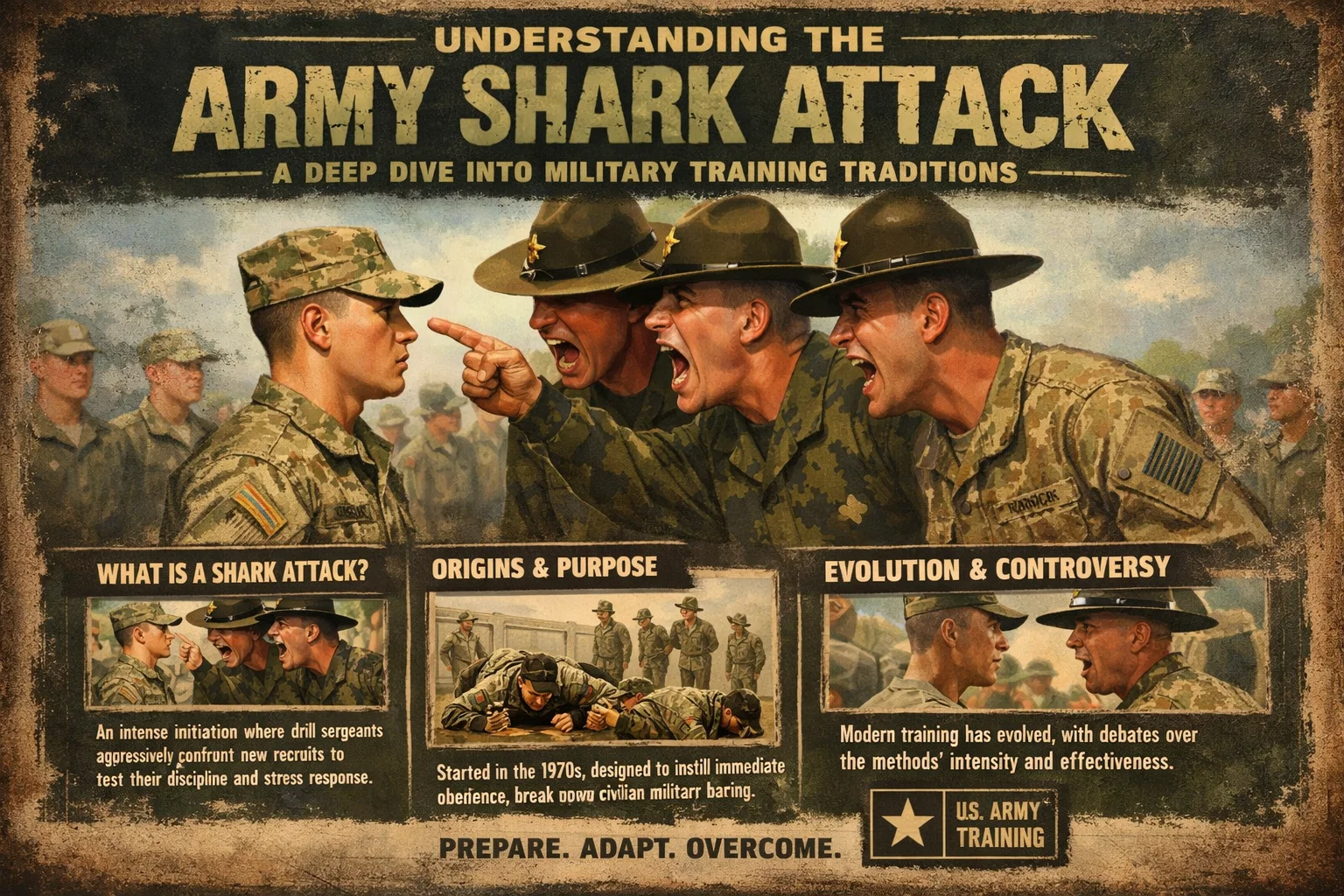
Have you ever wondered what it’s like to step off a bus into the world of army basic training, only to be swarmed by shouting drill sergeants? That’s the essence of the army shark attack, a longstanding ritual that’s sparked debates among veterans, recruits, and military leaders alike. This intense initiation, often described as a chaotic frenzy of commands and corrections, has been a staple in shaping soldiers for decades. But in recent years, it’s faced scrutiny, leading to changes that reflect evolving views on training and mental resilience. In this article, we’ll explore the ins and outs of the army shark attack, from its origins to its potential comeback, all while keeping things straightforward and engaging.
The army shark attack isn’t just some Hollywood exaggeration—it’s a real tactic used to break down civilian habits and build up military discipline right from day one. Picture this: new recruits, fresh-faced and nervous, arrive at boot camp, and suddenly, multiple drill sergeants descend like a pack, barking orders, demanding push-ups, and pushing limits. It’s designed to simulate stress, foster obedience, and create a team mindset under pressure. While some see it as essential tough love, others argue it’s outdated in today’s army. As we dive deeper, you’ll see how this practice fits into the broader picture of army basic training and why it’s still a hot topic in 2026.
The Origins and History of the Army Shark Attack
The army shark attack traces its roots back to the draft era of the Vietnam War, when the military needed a quick way to transform civilians into soldiers. Back then, with waves of draftees pouring in, drill sergeants used this aggressive welcome to establish authority instantly. It wasn’t called a “shark attack” at first, but the name stuck because of how the sergeants would circle and “attack” recruits verbally, much like sharks in a feeding frenzy. This method became ingrained in army culture, passed down through generations of trainers who believed it was the best way to instill discipline.
Over the years, the army shark attack evolved but stayed true to its core purpose. In the 1980s and 1990s, as the all-volunteer force took shape, it remained a key part of basic combat training. Veterans often recall it as a rite of passage that tested mental fortitude. For instance, during the Gulf War era, it helped prepare troops for high-stress environments. By the early 2000s, with operations in Iraq and Afghanistan, the focus shifted slightly toward realistic combat simulations, but the initial shock value of the army shark attack persisted. It’s fascinating how this tradition adapted to changing wars while keeping its intense flavor.
Historians of military training point out that similar tactics have been used in armies worldwide, but the U.S. Army’s version stands out for its theatrical intensity. Related practices in marine boot camp or navy training have their own twists, but the army shark attack became synonymous with that first-day chaos. As we look back, it’s clear this wasn’t just about yelling— it was about breaking barriers and building resilience, setting the stage for everything from rifle drills to leadership exercises.
Why the Army Shark Attack Was Implemented in Basic Training
At its heart, the army shark attack was all about creating instant compliance and teamwork in a high-pressure setting. Drill sergeants saw it as a tool to weed out those who couldn’t handle stress, mimicking the chaos of battlefield scenarios. By overwhelming recruits with commands and physical demands, it forced them to focus, listen, and adapt quickly—skills vital for survival in combat. This wasn’t random bullying; it was a calculated strategy to shift mindsets from individual to unit-focused thinking.
Psychologically, the army shark attack played on the fight-or-flight response, pushing recruits to choose “fight” through discipline. Experts in military psychology note that this initial shock helps build emotional toughness, reducing the likelihood of panic in real threats. For example, in urban warfare training, soldiers who endured this early intensity often performed better under fire. It’s like a crash course in handling the unexpected, which is why it stuck around for so long in army boot camp routines.
Beyond psychology, the army shark attack served practical purposes in logistics and safety. With large groups arriving, it ensured everyone followed protocols from the get-go, like proper uniform handling or quick movements. Related keywords like “military induction” or “boot camp initiation” highlight how this fits into broader training frameworks. While critics emerged over time, its proponents argue it created unbreakable bonds among platoons, turning strangers into brothers-in-arms overnight.
The Mechanics of an Army Shark Attack: What Really Happens
Imagine stepping off the bus at Fort Benning or another training base, duffel bag in hand, heart pounding. That’s when the army shark attack kicks in—drill sergeants, often three or more, swarm around you, shouting questions like “Why are you here?” or demanding immediate push-ups for the slightest hesitation. It’s not scripted, but it’s choreographed chaos: one sergeant might critique your posture while another orders you to empty your bags. The goal? To disorient and then reorient you toward army standards.
In practice, the army shark attack lasts anywhere from 30 minutes to an hour, depending on the group size. Recruits are made to hold positions, recite creeds, or perform calisthenics while being verbally challenged. Videos from past trainings show the intensity: sergeants inches from faces, voices booming. But it’s not all negative—amid the yelling, there’s instruction on basics like saluting or standing at attention. This blend of pressure and teaching is what made it effective for instilling habits.
Related to this, terms like “drill instructor tactics” or “basic training rituals” often describe similar events in other branches. Safety measures were always in place; no physical contact beyond what’s allowed, and medical checks followed. Yet, the emotional impact was profound, leaving many with “core memories” as one veteran put it. Understanding these mechanics helps demystify why it was seen as a cornerstone of army preparation.
Controversies Surrounding the Army Shark Attack
No discussion of the army shark attack is complete without addressing the controversies that led to its phase-out. Critics argued it bordered on hazing, potentially causing unnecessary trauma or discouraging diverse recruits. In an era focused on mental health, stories emerged of anxiety or PTSD-like symptoms stemming from this intense start. Women’s integration into combat roles amplified these concerns, with some saying the aggressive style didn’t account for different backgrounds.
On the flip side, supporters of the army shark attack claimed it was essential for building resilience in a volunteer force. They pointed to lower attrition rates in units that used it effectively. However, by the late 2010s, data from army studies showed mixed results on its long-term benefits, leading to calls for reform. Related debates in military forums often tie into broader issues like “toxic leadership” or “modern warfare training,” highlighting a shift toward inclusive methods.
The controversy peaked around 2020, when the army officially began replacing it. Media coverage, including articles and videos, fueled public opinion, with veterans split down the middle. Some saw it as softening the force, while others welcomed a more constructive approach. This divide reflects larger societal changes in how we view authority and stress in professional environments.
The Phase-Out: Why the Army Moved Away from Shark Attacks
By 2020, the army shark attack was on its way out, replaced by a more collaborative model. The decision stemmed from feedback that it didn’t align with recruiting a tech-savvy, diverse generation. Leaders like Command Sgt. Maj. Robert K. Fortenberry emphasized building trust over fear, arguing that modern soldiers respond better to mentorship. This shift was part of a broader overhaul in basic training, focusing on holistic development.
The phase-out wasn’t abrupt; it involved pilot programs testing alternatives. Data showed that without the army shark attack, recruits still achieved high proficiency in skills like marksmanship and tactics. Related keywords such as “army training reforms” or “boot camp evolution” capture this transition. It also addressed retention issues, as some potential soldiers were deterred by tales of the harsh welcome.
Post-phase-out, evaluations indicated improved morale and fewer injuries from stress-related incidents. Yet, not everyone agreed, with some units quietly maintaining elements of the old style. This move reflected the army’s adaptability, ensuring it remains relevant in attracting top talent while upholding standards.
Introducing the First 100 Yards: The Replacement for Army Shark Attack
Enter “The First 100 Yards,” the army’s answer to ditching the shark attack. This new event starts with a mock resupply mission, where recruits work as teams to carry gear across a field under simulated combat conditions. It’s physical but emphasizes cooperation, with drill sergeants guiding rather than dominating. The idea is to instill warrior ethos from the start without the psychological overload.
Compared to the army shark attack, The First 100 Yards builds confidence through achievement. Recruits complete tasks like navigating obstacles or communicating under duress, fostering bonds early. Videos from Fort Benning show smiling faces amid the sweat— a stark contrast to the old yelling. Related terms like “infantry school innovations” highlight how this fits into modern training doctrines.
Implementation began in infantry schools and spread army-wide. Feedback has been positive, with lower dropout rates and higher satisfaction scores. It’s not easier, just smarter, aligning with contemporary views on leadership and resilience.
A Comparison Table: Army Shark Attack vs. The First 100 Yards
To better illustrate the differences, here’s a side-by-side comparison:
| Aspect | Army Shark Attack | The First 100 Yards |
|---|---|---|
| Primary Goal | Establish dominance and instant obedience | Build teamwork and practical skills |
| Approach | Verbal intensity and individual pressure | Collaborative exercises and guidance |
| Duration | 30-60 minutes of chaos | Structured event over similar time |
| Psychological Impact | High stress, potential for trauma | Empowering, focuses on achievement |
| Outcome for Recruits | Shock and adaptation | Confidence and unit cohesion |
This table shows how the army evolved from confrontation to collaboration, yet both aim at creating capable soldiers.
As you can see, while the army shark attack was about breaking down, The First 100 Yards is about building up. Veterans might miss the old thrill, but data supports the change.
Recent Developments: Talks of Bringing Back the Army Shark Attack
Fast-forward to 2025-2026, and the army shark attack is making headlines again. Defense Secretary Pete Hegseth has floated the idea of reversing the ban, arguing it toughens troops for real-world threats. During interviews, he stressed starting strong at basic training and military academies. This comes amid concerns about readiness in an uncertain global landscape.
The potential revival has sparked mixed reactions. Some veterans cheer it as a return to proven methods, while others worry it could alienate recruits. Pentagon spokespeople confirm it’s under review, with pilots possibly testing a modified version. Related keywords like “army policy changes” or “Hegseth military reforms” are buzzing in discussions.
If reinstated, the army shark attack might look different—perhaps less extreme, incorporating mental health checks. This debate underscores the army’s ongoing balance between tradition and innovation.
Personal Stories and Quotes from Veterans on the Army Shark Attack
Hearing from those who’ve lived it brings the army shark attack to life. One veteran shared, “It was terrifying at first, but it made me realize I could handle anything. That core memory stuck with me through deployments.” Such anecdotes highlight its lasting impact.
Another quote from a drill sergeant: “The shark attack isn’t about cruelty; it’s about preparing them for the chaos of war. Without it, how do you simulate that first enemy contact?” These voices add humanity to the discussion.
A female recruit recalled, “I thought I’d break, but it bonded us. We laughed about it later.” Quotes like these show the dual nature—tough but transformative.
The Role of the Army Shark Attack in Building Mental Resilience
Mental resilience is key in the military, and the army shark attack was a frontline tool for forging it. By exposing recruits to controlled stress, it taught coping mechanisms like focus and perseverance. Psychologists compare it to exposure therapy, desensitizing to pressure.
In contrast to civilian life, where stress might come from deadlines, the army shark attack simulated life-or-death stakes. This built a foundation for advanced training, like ranger school. Related concepts include “stress inoculation training,” which echoes its principles.
Today, even without it, resilience remains central, but the debate lingers on the best methods.
How the Army Shark Attack Influences Modern Military Culture
The legacy of the army shark attack permeates army culture, from memes to movies. It’s referenced in films like “Full Metal Jacket,” shaping public perceptions of boot camp. Within ranks, it’s a badge of honor, with stories shared at reunions.
Culturally, it influenced leadership styles, emphasizing tough love. But as society evolves, so does the army, blending old traditions with new sensitivities. Keywords like “military heritage” capture this interplay.
Global Perspectives: Similar Training in Other Armies
Around the world, armies have their versions of the army shark attack. In the British Army, it’s “beasting,” intense physical sessions. Russian forces use harsh initiations too. These parallels show a universal need for breaking in recruits.
However, some nations, like those in Scandinavia, opt for gentler approaches, focusing on motivation. Comparing these highlights why the U.S. Army’s shark attack stood out for its intensity.
The Future of Army Basic Training: With or Without Shark Attacks?
Looking ahead, the army shark attack’s fate hangs in the balance. If revived, it could signal a tougher stance amid geopolitical tensions. Alternatively, sticking with The First 100 Yards might attract more recruits.
Innovation like VR simulations could complement or replace it. The army’s adaptability will decide.
Training Alternatives: Beyond the Army Shark Attack
Alternatives abound, from scenario-based drills to peer mentoring. Programs like “Warrior Tasks” emphasize skills over shock.
These methods prove effective, suggesting the army shark attack isn’t irreplaceable.
Impact on Recruitment: Does the Army Shark Attack Help or Hurt?
Recruitment stats show mixed impacts. Some are drawn to the challenge, others deterred. Post-ban, enlistment held steady, indicating adaptability.
In a competitive job market, a less intimidating start might boost numbers.
Psychological Studies on the Effects of Army Shark Attack
Studies reveal short-term stress spikes but long-term resilience gains. Army research supports moderation, hence the change.
Experts advocate balanced training for optimal outcomes.
Media Portrayals of the Army Shark Attack
From documentaries to TikToks, media amplifies the drama. Clips go viral, influencing perceptions.
Accurate portrayals educate, while sensational ones mislead.
Preparing for Basic Training: Tips in the Era of Potential Shark Attack Revival
If the army shark attack returns, prepare mentally: build fitness, study creeds. Stay resilient.
Even without it, focus on teamwork.
The Army Shark Attack in Pop Culture and Memes
Memes abound, poking fun at the intensity. It’s cultural shorthand for tough starts.
This lightens the legacy.
Ethical Considerations in Military Training Practices
Ethics demand effective yet humane training. The army shark attack tests this boundary.
Ongoing reviews ensure alignment with values.
Veteran Support: Dealing with Memories of the Army Shark Attack
For some, memories linger. Support groups help process.
Positive reframing turns it into strength.
Conclusion
In wrapping up, the army shark attack represents a pivotal chapter in military history—one of tradition, transformation, and ongoing debate. Whether it’s making a comeback or fading into lore, its influence on shaping soldiers is undeniable. As the army navigates future challenges, balancing toughness with compassion will be key. Ultimately, it’s about creating warriors ready for anything, and that’s a legacy worth honoring.
FAQ
What Exactly Is an Army Shark Attack?
An army shark attack refers to the traditional initiation in U.S. Army basic training where drill sergeants swarm new recruits with intense verbal commands and physical demands right upon arrival. This practice aimed to establish discipline and prepare soldiers for stress. It’s often remembered as a chaotic but formative experience.
Over time, the army shark attack has been scrutinized for its psychological effects, leading to its replacement. However, it remains a symbol of the rigorous path to becoming a soldier.
Why Was the Army Shark Attack Phased Out?
The army shark attack was phased out around 2020 because it was seen as outdated and potentially harmful to mental health. Leaders wanted a more inclusive approach that built trust rather than fear. This shift aligned with recruiting a diverse force.
Replacements like The First 100 Yards focus on teamwork, showing the army’s evolution while maintaining high standards.
Could the Army Shark Attack Make a Comeback?
Recent discussions, including from Defense Secretary Pete Hegseth, suggest the army shark attack might return to toughen training. It’s under review amid concerns about military readiness.
If revived, it could be modified to address past criticisms, blending tradition with modern needs.
How Does the Army Shark Attack Compare to Training in Other Branches?
The army shark attack is unique in its group intensity, but similar to Marine Corps’ “receiving” or Navy’s indoctrination. Each branch tailors initiations to their culture.
These practices all aim at building resilience, though approaches vary.
What Advice Do Veterans Give About Facing an Army Shark Attack?
Veterans advise staying calm, listening carefully, and remembering it’s temporary. Focus on the bigger picture of becoming a soldier.
Many say it builds character, turning fear into strength.
Is the Army Shark Attack Necessary for Building Discipline?
Opinions vary, but some argue the army shark attack effectively instills discipline through stress simulation. Others believe alternatives work just as well without the intensity.
